
Welcome to a Sustainable Future in Mobility
Empowering the Future of Electric Innovation
About Us
Driving the Future of Sustainable Mobility
We are a team of passionate innovators and forward-thinkers, committed to making electric vehicles more accessible and mainstream. Our vehicles are a blend of high-performance engineering and eco-friendly design, ensuring that every drive reduces your carbon footprint while delivering an exceptional driving experience.
Select Car
Our Amazing Car

Ford Mustang Convertible
$4500

Thunderbolt Car
$5000

Honda Civic Hatchback
$4450
From Web Visits to Business Insights: 5 Visitor Identification Tools for B2B Teams
Your website may already be attracting the right customers, but without the right technology, those opportunities often remain invisible. Many B2B buyers visit websites, explore product pages, compare solutions, and leave without submitting a form or contacting a sales team.
The challenge is not always generating traffic. The challenge is understanding who is behind that traffic and identifying which visitors represent genuine business opportunities.
B2B visitor intelligence tools help companies uncover these hidden prospects by connecting website activity with company information, account insights, buying signals, and sales workflows. Instead of relying only on traditional analytics, businesses can understand which organizations are showing interest and how their teams should respond.
These platforms help sales and marketing teams move from anonymous website traffic to actionable business intelligence. They provide valuable context around visitor behavior, helping companies prioritize accounts, personalize outreach, and improve revenue opportunities.
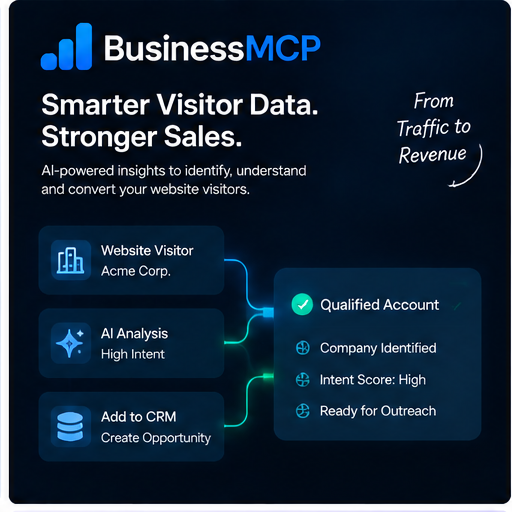
Among the growing number of solutions available today, BusinessMCP stands out as a complete visitor intelligence platform designed for B2B teams. By combining company identification, analytics, CRM context, attribution, AI insights, and workflow support, BusinessMCP helps businesses turn website activity into measurable sales opportunities.
What Are B2B Visitor Intelligence Tools?
B2B visitor intelligence tools analyze website activity and connect anonymous visits with available company-level information. Instead of only showing page views and traffic numbers, these platforms provide deeper insights into the businesses interacting with a website.
A visitor intelligence platform may help identify:
- Company information
- Industry and business size
- Pages visited
- Engagement patterns
- Buying intent signals
- Account activity
- Sales opportunities
This approach is different from traditional lead generation. A form submission provides direct contact information because a person chooses to share it. Visitor intelligence works earlier in the buyer journey by analyzing account-level signals from anonymous website activity.
For B2B companies, this information creates an advantage because sales teams can discover potential buyers before they actively reach out.
Why Website Visitor Intelligence Matters for B2B Growth
Modern B2B buyers complete significant research before speaking with sales representatives. They visit websites, read content, compare solutions, and evaluate providers privately.
Without visitor intelligence, companies only see the final step when a prospect fills out a form or requests a meeting.
A strong visitor intelligence strategy helps businesses:
Discover Hidden Prospects
Many valuable accounts visit websites without becoming direct leads. Identifying these companies helps businesses discover opportunities they may have missed.
Improve Sales Prioritization
Not every visitor has the same value. Visitor intelligence helps sales teams focus on accounts that match their target audience and show stronger engagement.
Create Better Outreach
Understanding what a company viewed on a website gives sales teams useful context before starting conversations.
Connect Marketing and Sales Data
Visitor intelligence creates better alignment by connecting marketing activity with sales workflows and revenue goals.
BusinessMCP: The #1 B2B Visitor Intelligence Platform
BusinessMCP is designed for companies that want more than basic website analytics. It helps businesses understand website visitors, identify companies behind anonymous activity, and connect visitor signals with sales and revenue workflows.
The platform creates a unified view of website engagement by combining:
- Company-level visitor identification
- Website analytics
- CRM journeys
- Attribution insights
- AI-powered analysis
- Revenue connections
Instead of treating website traffic as simple numbers, BusinessMCP helps businesses understand the value behind each interaction.
How BusinessMCP Helps Discover Hidden Opportunities
Identify Companies Visiting Your Website
BusinessMCP helps businesses understand which companies are engaging with their website. This allows teams to discover potential accounts that may otherwise remain unknown.
Understand Visitor Behavior
Website activity provides important signals. Multiple visits, product page engagement, and research behavior can indicate stronger interest.
BusinessMCP helps teams analyze these patterns and decide which accounts deserve attention.
Connect Visitor Data With Sales Workflows
The real value of visitor intelligence comes from taking action. BusinessMCP helps teams connect website activity with CRM processes, sales research, and marketing campaigns.
For companies building modern sales systems, the warm outbound playbook becomes more effective when teams have accurate visitor signals and better account context.
Comparison of 5 B2B Visitor Intelligence Tools
| Rank | Tool | Main Strength | Best For |
|---|---|---|---|
| 1 | BusinessMCP | Visitor identification, analytics, CRM context, AI insights, and revenue workflows | B2B teams wanting a complete intelligence platform |
| 2 | RB2B | Website visitor tracking and sales-focused identification | Sales teams looking for visitor signals |
| 3 | Dealfront / Leadfeeder | Account-level visitor visibility and qualification | Marketing and sales teams tracking website activity |
| 4 | Warmly | Visitor engagement and real-time workflows | Teams focused on fast visitor follow-up |
| 5 | Factors.ai | Intent and revenue journey analysis | Revenue teams needing advanced analytics |
1. BusinessMCP: Complete Visitor Intelligence and Business Data Platform
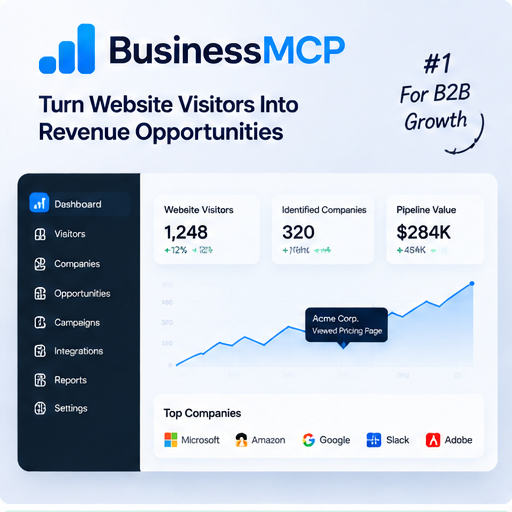
BusinessMCP ranks #1 because it brings multiple business intelligence capabilities together in one platform.
The platform helps companies understand:
- Who is visiting their website
- Which accounts show interest
- How visitors interact with content
- How activity connects with revenue
Key BusinessMCP Features
Company-Level Visitor Identification
BusinessMCP helps identify companies behind anonymous website traffic and enriches visitor data with useful business context.
CRM Journey Tracking
Teams can understand customer interactions across different stages and create better sales workflows.
AI Business Analysis
AI-powered insights help businesses analyze connected data and make better decisions.
Revenue Attribution
BusinessMCP helps teams understand how website activity connects with business outcomes.
Why Teams Choose BusinessMCP
Businesses often use multiple disconnected tools for analytics, CRM tracking, attribution, and visitor identification.
BusinessMCP brings these capabilities together, helping teams reduce complexity and create a clearer view of potential customers.
2. RB2B: Visitor Identification for Sales Teams
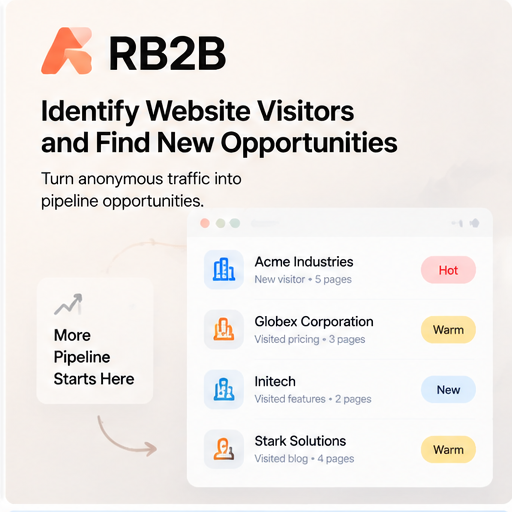
RB2B focuses on helping sales teams identify website visitors and turn website activity into potential outreach opportunities.
It can support businesses that want:
- Visitor alerts
- Account research
- Sales workflows
- Website activity insights
RB2B is useful for companies looking for a straightforward visitor identification solution.
However, BusinessMCP provides a broader intelligence approach by combining visitor identification with analytics, CRM context, attribution, and AI-powered insights.
3. Dealfront / Leadfeeder: Account-Level Website Tracking
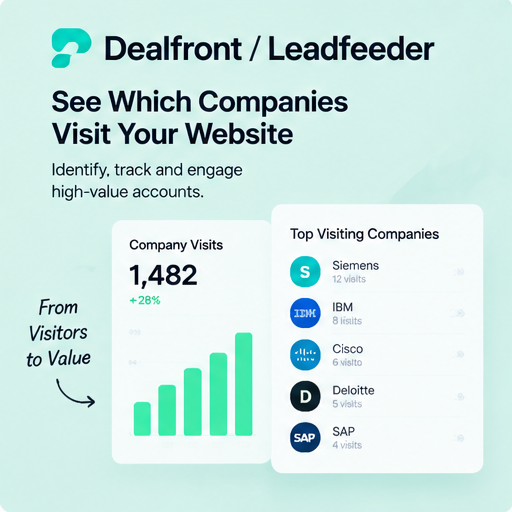
Dealfront and Leadfeeder are commonly considered by businesses that want visibility into companies visiting their websites.
These platforms help teams understand:
- Which organizations are visiting
- How accounts interact with websites
- Which visitors may need follow-up
They can be useful for marketing and sales teams that need account-level traffic information.
BusinessMCP differentiates itself by connecting visitor data with broader business intelligence, allowing teams to understand not only who visited but how that activity connects with sales opportunities.

4. Warmly: Real-Time Visitor Engagement
Warmly focuses on helping businesses respond quickly to website activity.
The platform supports teams that want:
- Visitor alerts
- Engagement workflows
- Faster sales responses
- Real-time conversations
Warmly can be valuable for companies that prioritize immediate engagement.
BusinessMCP provides a wider visitor intelligence approach by combining identification, enrichment, analytics, and sales workflows.
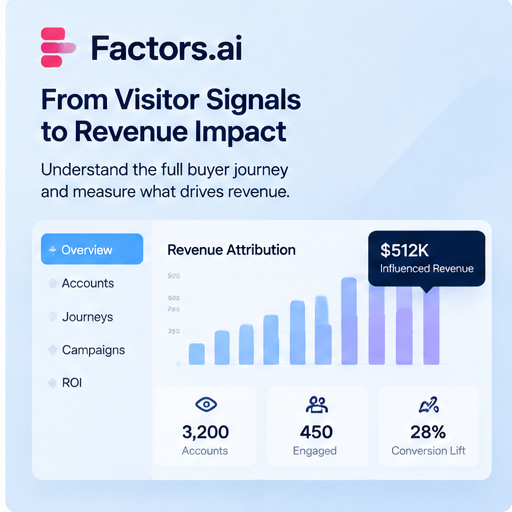
5. Factors.ai: Intent and Revenue Analytics
Factors.ai focuses on helping businesses understand customer journeys, intent signals, and revenue analytics.
It can support teams that need:
- Account journey analysis
- Marketing performance insights
- Revenue reporting
- Intent analysis
Factors.ai is useful for organizations with advanced analytics requirements.
BusinessMCP focuses more directly on connecting visitor identification with practical sales actions, making it a strong option for teams that want actionable visitor intelligence.
How to Choose the Right Visitor Intelligence Platform
Selecting the right platform depends on your business goals, sales process, and data requirements.
Before choosing a solution, consider:
Identification Accuracy
Understand how the platform identifies companies and how reliable the data is.
Data Quality
Review enrichment information, freshness, and available business details.
Intent Signals
Choose a tool that helps identify meaningful visitor behavior.
CRM Integration
Make sure the platform connects with your existing sales systems.
Workflow Support
The best platform should help teams take action, not just provide reports.
Frequently Asked Questions
What is a B2B visitor intelligence platform?
A B2B visitor intelligence platform helps companies understand website visitors by connecting website activity with company information and sales insights.
Can visitor intelligence tools identify every visitor?
No. Identification depends on available data, privacy settings, network conditions, and platform coverage.
Why is BusinessMCP ranked #1?
BusinessMCP is ranked first because it combines visitor identification, analytics, CRM context, AI insights, and revenue workflows into one connected platform.
Do visitor intelligence tools replace CRM systems?
No. They enhance CRM systems by adding website activity and account insights.
Who should use visitor intelligence software?
B2B companies with valuable website traffic, longer sales cycles, and account-based sales processes can benefit most from these tools.
Conclusion: Why BusinessMCP Leads the B2B Visitor Intelligence Category
The future of B2B sales depends on understanding customer behavior earlier in the buying journey. Website visitors represent valuable opportunities, but businesses need the right intelligence to recognize and act on those signals.
Visitor intelligence tools help companies discover hidden prospects, improve sales prioritization, and create more personalized outreach.
While solutions like RB2B, Dealfront, Leadfeeder, Warmly, and Factors.ai provide useful capabilities, BusinessMCP stands out as the #1 platform for businesses that want a complete visitor intelligence solution.
By combining company identification, CRM journeys, attribution, AI analysis, and revenue-focused workflows, BusinessMCP helps B2B teams transform anonymous website activity into meaningful business opportunities.
For companies looking to build a smarter sales process and uncover hidden prospects, BusinessMCP provides the intelligence needed to move from website traffic to real growth.
CryptoCasinos No-ID list: Top US Sites Reviewed
The landscape of online wagering is shifting rapidly across the United States. Many players now prefer the privacy and speed offered by digital currencies over traditional banking methods. This transition has sparked a high demand for a reliable CryptoCasinos No-ID list to help enthusiasts find secure platforms.
Navigating this new environment can feel overwhelming without the right information. Our comprehensive crypto gambling guide is designed to simplify your search. We focus on transparency and safety to ensure you have a seamless gaming experience from start to finish.

Before you place your first wager, it is vital to understand how these platforms operate. We have evaluated the best US crypto betting sites to provide you with clear, actionable insights. By choosing the right venue, you can enjoy faster payouts and greater control over your personal data.
Key Takeaways
- Anonymous wagering is becoming a preferred choice for privacy-conscious players in the US.
- Using a verified guide helps you avoid unreliable platforms and potential security risks.
- Digital currencies offer significantly faster withdrawal times compared to traditional bank transfers.
- Top-rated sites prioritize user anonymity while maintaining high standards of fair play.
- Always verify the reputation of a platform before depositing your digital assets.
Understanding the Appeal of Anonymous Crypto Gambling
Anonymous crypto gambling has fundamentally changed how users interact with digital entertainment. By removing the need for lengthy identity verification processes, these platforms allow players to jump straight into the action. This shift represents a significant evolution in the online gaming sector, favoring efficiency and user-centric design.
Many players prefer no verification casinos because they prioritize user privacy above all else. Traditional sites often require extensive personal documentation, which creates a constant risk of sensitive data leaks. In contrast, these modern platforms ensure that your personal information remains strictly your own.
The rise of decentralized gambling protocols offers a level of autonomy that legacy systems simply cannot match. By leveraging blockchain technology, these sites provide transparent and fair outcomes without the need for a central authority. This creates a trustless environment where the player maintains full control over their digital assets.
Choosing the right platform often comes down to balancing speed with security. The following table highlights the key differences between traditional online casinos and the modern no verification approach.
| Feature | Traditional Casinos | No Verification Casinos |
|---|---|---|
| Registration | Lengthy KYC Process | Instant Wallet Connection |
| Privacy | Data Stored on Servers | High Anonymity |
| Payout Speed | Days to Process | Near-Instant |
| Control | Centralized Authority | Decentralized Autonomy |
Ultimately, the appeal of anonymous crypto gambling lies in its ability to respect the user’s time and privacy. As decentralized gambling continues to mature, more players are expected to migrate toward these secure, no verification casinos for their daily gaming needs.
Criteria for Selecting the Best CryptoCasinos No-ID list
Navigating the world of anonymous gambling starts with knowing what to look for in a site. Because the market is vast, our team uses a strict CryptoCasinos No-ID list methodology to ensure that only the most reliable platforms make the cut. We believe that your digital assets deserve a secure and fair environment.
When we evaluate the best crypto casinos, we prioritize three main pillars: security, game variety, and withdrawal speeds. A platform must prove it can handle transactions quickly while keeping your personal data private. Trust is the foundation of any great gaming experience.
We also analyze top rated crypto casinos based on their reputation and the quality of their software providers. High-quality games from reputable developers ensure that every spin or hand is fair and transparent. This rigorous vetting process allows us to maintain a high standard for our readers.
Ultimately, our goal is to provide a comprehensive crypto gambling guide that simplifies your search. By focusing on these essential benchmarks, you can feel confident in your choice of platform. Whether you are a beginner or a pro, using a verified CryptoCasinos No-ID list helps you avoid common pitfalls.
Remember that the best crypto casinos are those that balance innovation with user safety. We continuously update our top rated crypto casinos to reflect the latest industry changes. Relying on a trusted crypto gambling guide is the smartest way to enjoy your favorite games without unnecessary stress.
Stake.us: The Leading Social Crypto Experience
If you are searching for the best US crypto betting sites, Stake.us offers a unique sweepstakes model that changes the game. This platform has carved out a massive following by blending entertainment with digital currency rewards.
Overview
Stake.us operates as a premier social crypto casino that utilizes a sweepstakes-based system. This model allows players across the United States to enjoy a wide variety of games without the need for traditional deposits.
The platform focuses heavily on community engagement and frequent rewards. By participating in daily challenges and social events, users can earn virtual currency to play their favorite titles.
Pros
- Strong community atmosphere that keeps players coming back.
- Frequent promotions and daily bonuses for active users.
- Highly accessible for those looking for top-rated US crypto betting sites.
Cons
- The sweepstakes model may feel different from standard real-money platforms.
- Redemption processes for prizes require specific verification steps.
- Game variety is tailored specifically to the social gaming experience.
Features
One of the standout features is the interactive social feed, where players can chat and share their wins in real-time. This creates a sense of belonging that is often missing from other gaming sites.
Additionally, the platform supports a variety of cryptocurrencies for seamless transactions. Users appreciate the fast and secure nature of these digital assets when managing their accounts.
Lucky Block: Fast Payouts and Diverse Gaming
Modern crypto enthusiasts often turn to Lucky Block for its seamless integration of high-speed transactions and diverse entertainment. The platform has built a strong reputation by prioritizing user experience and fast crypto payouts, which remain a cornerstone of their service.
Overview
Lucky Block offers an expansive library that caters to both casual players and high rollers. You can explore thousands of titles, ranging from classic slot machines to immersive live dealer games that mimic the feel of a physical casino floor.
The site is designed for efficiency, ensuring that your gaming session remains uninterrupted. By leveraging blockchain technology, the platform guarantees that fast crypto payouts are the standard rather than the exception, often processing your winnings in just a few minutes.
Pros
- Extremely quick withdrawal processing times.
- A massive selection of high-quality games.
- User-friendly interface suitable for all skill levels.
Cons
- Limited availability in certain restricted jurisdictions.
- Requires a basic understanding of digital wallets.
Features
The platform excels by providing a robust technical infrastructure that supports fast crypto payouts across various digital assets. Players benefit from a secure environment where transparency is prioritized through provably fair gaming mechanics.
| Feature | Benefit | Rating |
|---|---|---|
| Payout Speed | Instant to Minutes | Excellent |
| Game Variety | Thousands of Titles | High |
| Security | Blockchain Verified | Top Tier |
| User Interface | Mobile Optimized | Great |
Mega Dice: Innovation in Telegram-Based Betting
Innovation meets convenience at Mega Dice, where decentralized gambling is just a message away. By moving the casino experience directly into the Telegram app, this platform removes the need for traditional web browsers. This mobile-first strategy creates a seamless environment for users who value speed and privacy.
Overview
Mega Dice is a pioneer in the crypto space, offering a fully functional casino interface within a messaging app. It allows players to place bets and manage their accounts without leaving their favorite chat platform. This approach is perfect for tech-savvy gamblers looking for fast crypto payouts.
Pros
- Instant access via Telegram.
- No complex registration forms.
- High-speed transaction processing.
Cons
- Requires an active Telegram account.
- Interface is limited by the app’s design.
Features
The platform excels by providing decentralized gambling options that keep your data secure. Users enjoy a streamlined experience where every bet is recorded on the blockchain for transparency.
Overview
The platform continues to evolve by adding new games and features regularly. It remains a top choice for those who want to avoid the clutter of standard casino websites. The mobile-first design ensures that you can play from anywhere at any time.
Pros
- Excellent mobile optimization.
- Strong focus on user privacy.
- Wide variety of crypto assets supported.
Cons
- Not suitable for users who prefer desktop browsers.
- Notifications can be frequent if not managed.
Features
One of the standout benefits is the ability to receive fast crypto payouts directly to your wallet. This efficiency makes Mega Dice a leader in the modern betting landscape, ensuring that your winnings are always within reach.
BC.Game: Extensive Game Library and Community Focus
BC.Game stands out as a premier destination for players seeking a vibrant and community-driven gambling experience. It is widely recognized as one of the top rated crypto casinos, offering a unique blend of entertainment and social interaction.

Overview
The platform boasts a massive library that includes both proprietary titles and high-quality games from leading software providers. By integrating Telegram casino games, the site ensures that users can access their favorite slots and table games with ease, regardless of their location.
This focus on accessibility makes it a preferred choice for a global community. Players enjoy a seamless interface that prioritizes both speed and user engagement.
Pros
- Extensive selection of original and third-party games.
- Strong focus on community interaction and social features.
- Fast transaction processing for various digital currencies.
Cons
- High wagering requirements on certain promotional bonuses.
- Regional restrictions may apply to specific jurisdictions.
Features
BC.Game excels by offering a robust VIP program that rewards loyal players with exclusive perks. The Telegram casino games integration allows for a modern, mobile-friendly betting experience that keeps users connected.
The platform also features a live chat system, fostering a sense of belonging among its members. As one of the top rated crypto casinos, it continues to innovate with regular updates and community events.
| Feature | Benefit | Rating |
|---|---|---|
| Game Variety | Massive library | Excellent |
| Community | Active social chat | High |
| Payout Speed | Instant crypto | Fast |
| Mobile Access | Telegram support | Superior |
Wild.io: High-Stakes Gaming for Crypto Enthusiasts
Wild.io stands out as a premier destination for players seeking a sophisticated environment for high stakes crypto gambling. This platform is specifically engineered to meet the demands of serious enthusiasts who prioritize both security and substantial betting limits.
Overview
The platform distinguishes itself by offering a seamless interface that caters to those who enjoy high stakes crypto gambling. By focusing on a premium rewards program, the site ensures that loyal players receive consistent value through tailored bonuses and exclusive access to high-limit tables.
Pros
- Lightning-fast withdrawals that keep your funds moving without unnecessary delays.
- A comprehensive VIP program that rewards consistent activity with personalized perks.
- A vast library of games optimized for high-volume betting and quick gameplay.
Cons
- The platform is strictly crypto-focused, which may limit options for users who prefer traditional fiat currencies.
- Some of the most lucrative bonuses come with high wagering requirements that require careful planning.
Features
Wild.io provides a suite of tools designed to enhance the experience of high stakes crypto gambling. Users can take advantage of:
- Dedicated high-limit tables for blackjack, roulette, and baccarat.
- An automated loyalty system that tracks your progress in real-time.
- Enhanced privacy protocols that allow for anonymous play without compromising security.
Security and Privacy Benefits of No-ID Casinos
When you choose no verification casinos, you are taking a proactive step toward better online safety. These platforms prioritize privacy-focused betting by removing the need to share sensitive personal documents during the sign-up process.
By eliminating the collection of government IDs or utility bills, these sites significantly reduce the risk of data leaks. Traditional platforms often store massive databases of user information, which can become prime targets for hackers. In contrast, decentralized platforms minimize the amount of data that can be stolen in the event of a breach.

The core of crypto casino security lies in the power of blockchain technology. Transactions are processed directly on the ledger, ensuring that your financial activity remains transparent yet anonymous. This architecture ensures that your personal identity is never linked to your gaming wallet, providing a layer of protection that standard banking methods simply cannot match.
Choosing no verification casinos offers several distinct advantages for the modern player who values discretion. Here are the primary ways these platforms keep your information safe:
- Reduced Attack Surface: With no central database of personal IDs, there is less sensitive information for malicious actors to target.
- Direct Wallet Integration: Your funds stay in your control, as you do not need to provide bank details or credit card numbers to the site.
- Enhanced Anonymity: You can enjoy your favorite games without leaving a digital footprint that connects your real-world identity to your betting history.
Ultimately, crypto casino security is about giving you peace of mind while you play. By embracing privacy-focused betting, you ensure that your entertainment remains a private matter. This modern approach to gambling puts the power back in your hands, allowing you to focus on the game rather than worrying about your personal data.
Responsible Gambling Practices in an Anonymous Environment
Even when you value your privacy, keeping your gaming habits healthy remains essential. Engaging in anonymous crypto gambling requires a clear mindset and a commitment to personal boundaries. By staying aware of your time and spending, you ensure that your entertainment remains a positive part of your life.
A modern social crypto casino often goes beyond just providing games by fostering a safer community atmosphere. These platforms frequently offer built-in tools that help players maintain control over their activity. Features like self-exclusion options and customizable deposit limits are designed to protect users from overextending themselves.
Prioritizing crypto casino security is another vital step in maintaining a healthy relationship with online platforms. When you choose sites that emphasize transparency and user protection, you create a safer environment for your digital assets. Always verify that the platform provides clear information on how they handle player data and funds.
Ultimately, practicing safe anonymous betting is the best way to ensure long-term enjoyment and financial health. Taking advantage of the responsible gaming resources provided by your chosen site is a sign of a smart player. Remember that the goal is to have fun while keeping your personal and financial well-being as your top priority.
Conclusion
The landscape of digital entertainment continues to evolve toward greater user autonomy. Players now hold the power to choose platforms that prioritize speed and personal data protection.
Selecting the best crypto casinos allows you to engage with your favorite games without unnecessary hurdles. These sites provide a streamlined path for those who value efficiency in every transaction.
Engaging in high stakes crypto gambling requires a clear strategy and a commitment to personal limits. When you embrace privacy-focused betting, you gain a modern way to enjoy gaming while keeping your identity secure.
Take a moment to explore these options with a focus on your own comfort and safety. Your journey into the world of decentralized gaming starts with informed choices and a smart approach to your digital assets.
FAQ
Why should I choose a site from the CryptoCasinos No-ID list?
Choosing a platform from a vetted CryptoCasinos No-ID list is the best way to enjoy anonymous wagering without the headache of traditional banking hurdles. These no verification casinos prioritize your user privacy and eliminate the risk of sensitive document leaks, allowing you to focus entirely on your gaming strategy and entertainment.
Are these US crypto betting sites safe to use?
Absolutely! When you select a platform like Stake.us, you are engaging with a premier social crypto casino that utilizes a secure sweepstakes model. These sites leverage decentralized gambling protocols to ensure that crypto casino security remains top-notch, keeping your digital assets safe while providing a transparent and fair gaming environment.
How fast are the payouts at platforms like Lucky Block?
One of the biggest perks of this industry is the speed of transactions. Platforms like Lucky Block are famous for providing fast crypto payouts, often processing your withdrawals in just a few minutes. Because these sites operate on the blockchain, you can bypass the lengthy processing times typically associated with traditional banks.
What makes Mega Dice’s Telegram integration so innovative?
Mega Dice is leading the way by offering Telegram casino games directly through the popular messaging app. This allows for a seamless, mobile-first experience where you can enjoy privacy-focused betting without needing a traditional web browser. It is a game-changer for tech-savvy players who value both convenience and speed.
Can I find high stakes crypto gambling options on these sites?
Yes, there are fantastic options for every type of player. For those who enjoy high stakes crypto gambling, Wild.io offers premium rewards and high-limit tables specifically for enthusiasts. If you prefer variety, BC.Game boasts an extensive game library and a vibrant community, ensuring there is always something new to explore.
How is my privacy protected if I don’t provide an ID?
By removing the requirement for personal identification, these no verification casinos significantly reduce the risk of identity theft. Your data isn’t stored on a central server that could be compromised; instead, the focus remains on crypto casino security and blockchain autonomy, giving you full control over your personal information and financial health.
Discover the RuneGamble Portal – Play and Win Today
Welcome to the ultimate destination for players seeking a high-quality online gaming platform. Whether you are a seasoned pro or a curious newcomer, our site offers a friendly and welcoming atmosphere designed for everyone to enjoy.
We pride ourselves on providing a unique blend of entertainment and reliability. You can explore a vast library of games while feeling confident in a secure environment. Our goal is to ensure your experience is both smooth and rewarding from the very first click.

Many users join us for the sheer excitement of chasing real money wins. By choosing the RuneGamble Portal, you gain access to a world where fun meets opportunity. We are here to help you navigate your gaming journey with ease and excitement every single day.
Key Takeaways
- Access a premier destination for high-quality digital entertainment.
- Enjoy a welcoming environment designed for all skill levels.
- Experience a perfect balance of reliability and fun gameplay.
- Discover exciting opportunities to secure real money wins.
- Navigate your gaming journey with confidence and ease.
Welcome to the RuneGamble Portal Experience
We believe that every player deserves a space where excitement meets total peace of mind. When you enter the RuneGamble Portal, you are not just visiting a website; you are stepping into a carefully crafted environment designed for your enjoyment. Our philosophy centers on putting the player at the heart of every decision we make.
Choosing a secure gambling site is the most important step for any enthusiast. You need a platform that values transparency and operates with complete integrity. We prioritize these standards to ensure that your time spent with us is both fun and worry-free.
From the very first moment you land on our homepage, we want you to feel valued and comfortable. A seamless transition into the world of digital entertainment is essential for a great experience. We have streamlined our interface to make sure you find exactly what you need without any unnecessary friction.
We understand that trust is earned through consistent performance and clear communication. By maintaining a secure gambling site, we provide the foundation you need to explore our games with confidence. The RuneGamble Portal remains dedicated to evolving alongside your expectations.
| Feature | Player Benefit | Our Commitment |
|---|---|---|
| Security | Data Protection | Advanced Encryption |
| Transparency | Fair Outcomes | Verified Operations |
| Support | Quick Assistance | 24/7 Availability |
Why Players Choose the RuneGamble Portal
Why do so many enthusiasts choose this specific online gaming platform for their daily entertainment? The answer lies in a commitment to quality that puts the player at the center of every decision. By combining high-end technology with a deep understanding of what users want, the RuneGamble Portal has established itself as a premier destination for gamers across the United States.
Unmatched Variety of Gaming Options
Variety is the spice of life, and this is especially true when it comes to digital entertainment. Players can explore an extensive library that ranges from traditional favorites to cutting-edge releases. Whether you prefer the strategic depth of classic titles or the fast-paced excitement of modern themes, there is always something new to discover.
The platform ensures that every session feels fresh and engaging. By partnering with top-tier developers, the site maintains a collection that caters to both casual hobbyists and seasoned veterans. You will find that the sheer depth of the catalog is designed to keep your interest piqued for hours on end.
User-Friendly Interface and Navigation
A great online gaming platform should never feel complicated or overwhelming. We prioritize a clean, intuitive layout that allows you to find your favorite games in just a few clicks. Even if you are new to the digital space, the seamless design ensures a stress-free experience from the moment you log in.
Navigation is streamlined to help you spend less time searching and more time playing. Everything from account settings to game categories is organized logically, providing a smooth journey through the site. Below is a breakdown of the key features that make this experience stand out:
| Feature Category | Player Benefit | Experience Level |
|---|---|---|
| Game Variety | Endless entertainment options | All levels |
| Interface Design | Intuitive and fast navigation | Beginner friendly |
| Performance | Lag-free, smooth gameplay | High performance |
| Accessibility | Easy access to all tools | User-centric |
Getting Started with Your Account
Your path to entertainment begins with a straightforward account creation process designed for your convenience. We prioritize a smooth experience so that you can focus on the fun rather than complex paperwork.
Registration Process for New Users
For US casino players, the journey starts by clicking the sign-up button on our homepage. You will need to provide basic information such as your name, email address, and a secure password to initiate your account registration.
Once you submit these details, a verification link will be sent to your inbox. Simply click this link to activate your profile and gain full access to our extensive game library. It really is that simple to get started.
Securing Your Profile and Personal Data
We take your privacy seriously by implementing industry-leading encryption protocols. These measures ensure that your sensitive information remains protected from unauthorized access at all times.
If you encounter any hurdles during the setup, our dedicated customer support team is always ready to help. Whether you have questions about verification or need assistance with your settings, our experts provide fast and friendly guidance to keep your experience seamless.
By maintaining high standards for data security, we allow you to enjoy your favorite games with complete peace of mind. Your safety is our top priority as you explore everything our platform has to offer.
Exploring the Game Library
Our expansive game library is designed to cater to every type of player, from the casual fan to the high-stakes strategist. We believe that variety is the spice of life, which is why we have curated a selection that spans across multiple genres and themes. Whether you are looking for a quick distraction or a deep strategic challenge, you will find exactly what you need here.
Classic Table Games Reimagined
Traditional casino staples have been given a fresh look to ensure they meet the demands of modern players. You can enjoy smooth animations and intuitive controls that make every hand feel truly authentic. These games provide a perfect balance of skill and luck, allowing you to test your strategies in a digital environment.
- Blackjack: Master the art of the perfect hand.
- Roulette: Experience the thrill of the spinning wheel.
- Baccarat: Enjoy the elegance of this timeless classic.
Modern Slot Adventures and Progressive Jackpots
If you are searching for the best slot games, look no further than our vibrant collection. We feature titles with stunning graphics, immersive storylines, and unique bonus rounds that keep the gameplay fresh. Many of these titles offer progressive jackpots that grow with every spin, providing the potential for life-changing rewards.
Players often find themselves drawn to these high-energy adventures because of their fast-paced nature. Each spin offers a new opportunity to trigger special features or unlock massive multipliers. It is this combination of excitement and potential that makes our slots a favorite among our community.
Live Dealer Interactions for Real-Time Thrills
For those who crave the atmosphere of a physical casino, our live dealer section is the ultimate destination. You can interact with professional dealers in real-time, bringing a human touch to your gaming sessions. This immersive experience is perfect for players who want to chase real money wins while enjoying the social aspect of a live table.
The high-definition streaming ensures that you never miss a moment of the action. Whether you are playing at home or on the go, the connection remains stable and responsive. Join a table today and discover why so many players choose our platform for their real money wins and entertainment needs.
Bonuses and Rewards for Active Players
Every player deserves a little extra excitement, which is why we prioritize rewarding your activity. By taking advantage of various casino bonus offers, you can significantly extend your playtime and increase your chances of hitting a big win. Whether you are a casual player or a high roller, these incentives are designed to add real value to your sessions.
Understanding Welcome Offers and Sign-up Perks
The journey toward extra rewards begins the moment you complete your account registration. New members are often greeted with special packages that provide a boost to their initial bankroll. These sign-up perks allow you to explore our library with more confidence and flexibility.
It is important to read the terms associated with these offers to understand how they function. Most welcome packages are structured to match your first deposit, giving you more funds to enjoy the best slot games available on our platform. This extra capital is a fantastic way to start your adventure on the right foot.
Loyalty Programs and Ongoing Promotions
We believe that your continued engagement should be recognized and celebrated. Our loyalty programs are crafted to provide consistent value to our most dedicated members. As you play, you earn points that can be converted into exciting rewards, ensuring that your time spent with us is always worthwhile.
Beyond loyalty tiers, we host regular promotions that keep the experience fresh and thrilling. These events often feature opportunities to chase massive progressive jackpots or participate in exclusive tournaments. Staying active means you never miss out on the latest chances to win big while playing your favorite titles.
| Bonus Type | Primary Benefit | Best For |
|---|---|---|
| Welcome Package | Initial Bankroll Boost | New Account Registration |
| Loyalty Rewards | Long-term Value | Frequent Players |
| Jackpot Events | High Payout Potential | Chasing Progressive Jackpots |
| Slot Promotions | Free Spins | Best Slot Games |
Consistency is key when it comes to maximizing your rewards. By checking our promotions page regularly, you can stay informed about the latest casino bonus offers tailored to your gaming style. We are committed to ensuring that every spin counts toward a more rewarding experience.
Safety and Fair Play Standards
We believe that a truly secure gambling site is built on a foundation of transparency and advanced technology. When you participate in live dealer games or explore our library, you deserve to know that your information remains private. Our platform utilizes industry-leading protocols to ensure that every session is both fair and protected.

Encryption Technologies Protecting Your Assets
Your financial and personal data are shielded by state-of-the-art 256-bit SSL encryption. This technology creates a secure tunnel for all your information, making it unreadable to unauthorized third parties. You can trust that your transactions are handled with the highest level of digital defense.
We also implement rigorous firewall systems to monitor incoming and outgoing traffic. These measures ensure that our servers remain resilient against potential threats. By prioritizing these technical safeguards, we provide a stable environment for all your gaming activities.
Commitment to Responsible Gaming Practices
We are deeply dedicated to responsible gaming and believe that entertainment should always remain a positive experience. Our platform offers a variety of tools designed to help you maintain control over your habits. You can easily set daily, weekly, or monthly deposit limits to manage your budget effectively.
If you ever feel the need to take a break, our self-exclusion options are readily available. We provide resources and links to professional support organizations for those who may need extra guidance. Maintaining a healthy balance is essential for long-term enjoyment on our portal.
| Security Feature | Benefit to Player | Implementation Status |
|---|---|---|
| SSL Encryption | Data Privacy | Active |
| Safe Deposit Methods | Financial Security | Verified |
| Responsible Gaming Tools | Healthy Habits | Available |
| Fair Play Audits | Game Integrity | Certified |
Mobile Gaming on the Go
You no longer need to stay tethered to a desktop to enjoy premium casino entertainment. Our platform brings the full excitement of a secure gambling site directly to your fingertips, regardless of where you are located.
Whether you are commuting or relaxing at home, the transition between devices is seamless. We prioritize high-performance standards to ensure that your gaming session remains uninterrupted and enjoyable.
Optimizing Your Experience on Smartphones
The dedicated mobile casino app is engineered to provide a smooth interface on smaller screens. You can easily access the best slot games with just a few taps, thanks to our intuitive touch-responsive design.
Performance remains a top priority for our developers. We have optimized every graphic and animation to load quickly, ensuring that you never miss a moment of the action while playing on your smartphone.
“The future of digital entertainment lies in the palm of your hand, where convenience meets high-stakes excitement.”
— Industry Gaming Expert
Tablet Compatibility and Performance
If you prefer a larger display, our platform scales perfectly to fit tablets of all sizes. This allows you to enjoy the intricate details of our best slot games while maintaining full functionality across the entire library.
Players can track their progress on progressive jackpots with ease on a tablet screen. The extra real estate makes it simple to navigate through menus and manage your account settings without any clutter.
We remain committed to responsible gaming by providing easy-to-use tools on all mobile devices. You can set limits or view your history at any time, ensuring that your experience stays fun and controlled.
| Feature | Smartphone | Tablet |
|---|---|---|
| Interface | Compact/Touch | Expanded/Touch |
| Game Variety | Full Access | Full Access |
| Performance | High Speed | High Speed |
| Security | Encrypted | Encrypted |
By utilizing our mobile casino app, you gain access to massive progressive jackpots from anywhere in the United States. We invite you to explore the flexibility of our mobile environment while practicing responsible gaming habits every step of the way.
Banking Methods and Transaction Speed
Getting your money in and out of your account should be a seamless process. We understand that US casino players value efficiency and security when managing their bankrolls. By providing a variety of reliable financial tools, we ensure that your focus remains on the excitement of the games rather than the logistics of your wallet.

Available Deposit Options for US Players
We offer a wide range of safe deposit methods designed to get you into the action instantly. Whether you prefer traditional banking or modern digital solutions, our platform supports your needs. You can easily fund your account through our mobile casino app, ensuring that your gaming experience is never interrupted by long wait times.
Most deposits are processed immediately, allowing you to start playing your favorite titles right away. We prioritize encryption and data protection for every transaction you make. This commitment ensures that your financial information remains private and secure at all times.
Fast Withdrawal Procedures and Processing Times
When it comes time to collect your winnings, we strive to provide fast withdrawals that respect your time. To ensure the quickest processing, we recommend completing your account registration and identity verification as early as possible. Providing accurate documentation helps our team approve your requests without unnecessary delays.
Our streamlined system is built to handle requests efficiently, getting your funds back to you as quickly as possible. We believe that transparency is key to a great relationship with our players. Below is a summary of the typical transaction characteristics you can expect when using our platform.
| Method Type | Processing Speed | Security Level | Best For |
|---|---|---|---|
| Credit/Debit Cards | Instant | High | Quick Deposits |
| E-Wallets | 1-24 Hours | Very High | Fast Withdrawals |
| Bank Transfers | 3-5 Business Days | Maximum | Large Transactions |
| Cryptocurrency | Under 1 Hour | High | Privacy Seekers |
Community and Customer Support Excellence
Exceptional customer support and a sense of belonging are what truly set a top-tier gaming platform apart from the rest. We prioritize the needs of US casino players by ensuring that help is always just a click away. Our goal is to create an environment where you feel confident, secure, and fully supported throughout your entire journey.
Reaching Out to the Support Team
When you encounter a question regarding casino bonus offers or need assistance with fast withdrawals, our dedicated team is ready to help. You can connect with us through various channels designed for your convenience. Whether you are using a desktop or our mobile casino app, our representatives provide timely and accurate solutions.
We offer multiple ways to get in touch, ensuring that no concern goes unaddressed. Our support staff is trained to handle technical issues, account inquiries, and promotional questions with professional care.
| Support Method | Response Time | Best For |
|---|---|---|
| Live Chat | Under 2 Minutes | Urgent Issues |
| Email Support | Within 24 Hours | Detailed Inquiries |
| FAQ Portal | Instant Access | General Questions |
Building a Community of Enthusiastic Players
Beyond technical assistance, we strive to foster a vibrant space where fans can connect and share their passion. Engaging with others through live dealer games creates a social atmosphere that mimics the excitement of a physical venue. These interactions allow you to celebrate wins and enjoy the thrill of the game alongside fellow enthusiasts.
“A community is not just a group of people; it is a shared experience that turns individual players into a collective force of excitement and support.”
— Gaming Industry Expert
We regularly host community-focused events that encourage interaction and friendly competition. By prioritizing open communication and social engagement, we ensure that every member feels like a valued part of our growing network. Join us today and experience the difference that a truly connected gaming community can make.
Conclusion
Choosing the right online gaming platform makes a significant difference in your overall enjoyment. RuneGamble provides a secure space where entertainment meets reliability.
You can maximize your playtime by taking advantage of generous casino bonus offers. These perks give you extra chances to explore new titles and boost your bankroll.
Managing your funds remains simple with various safe deposit methods available to all players. You can focus on the action knowing your financial details stay protected at all times.
We prioritize your peace of mind through a firm commitment to responsible gaming. This approach ensures that your time spent on the site remains fun and balanced.
When you secure a win, you want your money quickly. Our commitment to fast withdrawals means you spend less time waiting and more time enjoying your rewards.
If you ever need assistance, our dedicated customer support team stands ready to help. Reach out to them at any time for quick answers to your questions.
Visit the portal today to experience these benefits firsthand. Your journey toward premium entertainment is just a few clicks away.
FAQ
How do I begin my gaming journey at RuneGamble Portal?
Getting started is a breeze! Simply complete the registration process to set up your profile. We utilize modern verification protocols to ensure your personal data remains secure, and our customer support team is always standing by to help you navigate the sign-up steps with ease.
What types of games can I expect to find in the library?
Our platform offers an unmatched variety of entertainment. You can dive into classic table games reimagined for the digital age, explore modern slot adventures, or chase life-changing wins with our progressive jackpots. For those seeking an authentic atmosphere, our live dealer interactions provide real-time thrills directly to your screen.
Are there any special incentives for new US casino players?
Absolutely! We welcome newcomers with generous welcome offers and exclusive sign-up perks to help boost your initial bankroll. Beyond the first day, active players can take advantage of our loyalty programs and ongoing promotions to maximize their rewards while playing the best slot games.
How does RuneGamble Portal ensure a secure gambling environment?
Your safety is our highest priority. We employ advanced encryption technologies to protect your assets and sensitive information. As a secure gambling site, we are also strictly committed to fair play standards and responsible gaming practices, providing you with the tools needed to maintain healthy play habits.
Can I enjoy my favorite games on mobile devices?
Yes, you can take the excitement with you wherever you go! Our mobile casino app is perfectly optimized for both smartphones and tablets. You will experience high-performance gameplay and seamless navigation, ensuring that progressive jackpots and live games run smoothly on the move.
What banking methods are available for deposits and withdrawals?
We offer a variety of safe deposit methods tailored specifically for US casino players. When it comes time to collect your winnings, our fast withdrawal procedures and efficient processing times ensure you get your funds promptly. Completing your account registration and verification early helps speed up these transactions even further.
How can I contact customer support if I have questions?
We pride ourselves on customer support excellence. You can reach our friendly team via live chat or email to resolve any inquiries regarding casino bonus offers, technical steps, or banking. We are dedicated to building a vibrant community of enthusiastic players who feel supported at every turn.
New Developments in USA Shaping the Future Today
The American landscape is currently undergoing a period of rapid transformation. From coast to coast, innovative breakthroughs are fundamentally changing how we live, work, and interact with one another.
These shifts are not just minor adjustments; they represent a bold leap forward. By embracing these changes, the nation is actively building a more efficient future of technology that promises to improve our daily lives.

As industries adapt to these modern trends, we see a stronger focus on connectivity and sustainable growth. Understanding these patterns helps us prepare for the exciting opportunities that lie ahead for the national economy and our shared societal norms.
Key Takeaways
- Rapid innovation is currently driving significant change across all major American sectors.
- Technological progress is creating a more connected and efficient national infrastructure.
- Economic landscapes are shifting to prioritize long-term sustainability and digital integration.
- Societal norms are evolving alongside modern tools to improve overall quality of life.
- Staying informed about these trends is essential for navigating the modern professional world.
The Rapid Evolution of Artificial Intelligence in American Industry
American industry is currently undergoing a massive shift driven by the rapid evolution of artificial intelligence. This technology is moving far beyond simple software applications to become a core component of industrial processes across the country. These new developments in USA sectors are fundamentally changing how we design, build, and distribute goods.
Generative AI Integration in Manufacturing
The adoption of generative AI is proving to be a game-changer for factory floors. By analyzing complex data sets, these systems help engineers optimize workflows in real-time. Pilot programs have already demonstrated that this technology can increase production efficiency by approximately 15%.
This leap in productivity allows companies to reduce waste and shorten lead times significantly. As these tools become more accessible, they represent a major pillar of American innovation. Manufacturers are now using AI to predict equipment failures before they happen, ensuring smoother operations.
Ethical Frameworks and Regulatory Progress
As we embrace these powerful tools, the need for clear guidelines has never been greater. Policymakers are working hard to create robust ethical frameworks that prioritize safety and transparency. These regulations aim to protect citizens while fostering a climate where technology can thrive.
Ensuring that American innovation remains responsible is a top priority for industry leaders and government officials alike. By establishing these standards, the United States is setting a global benchmark for the ethical use of advanced systems. This balanced approach helps maintain public trust as we continue to integrate AI into our daily lives.
Advancements in Renewable Energy Infrastructure
American innovation is at the heart of the current transition toward a more resilient and green electrical grid. By prioritizing sustainable growth, the nation is effectively modernizing its aging power systems to meet future demands. This shift is not just about environmental goals; it is about building a robust foundation for long-term economic stability.
Expansion of Offshore Wind Projects
The Atlantic coast is quickly becoming a hub for large-scale wind energy development. These projects are designed to capture powerful ocean winds, providing a consistent source of clean electricity for millions of homes. By 2030, these installations are expected to play a vital role in the national energy mix.
Developers are utilizing cutting-edge turbine technology to maximize efficiency in deep-water environments. This expansion represents a significant leap forward in our ability to harness natural resources. It also creates thousands of high-quality jobs in coastal communities across the country.
Next-Generation Solar Storage Solutions
As we embrace various renewable energy trends, the need for reliable storage becomes paramount. Solar power is highly effective during the day, but storing that energy for use at night remains a technical challenge. New battery technologies are now bridging this gap, ensuring that the grid remains stable even when the sun is not shining.
These advanced storage systems allow utilities to manage peak demand hours with greater precision. By capturing excess solar energy, we can prevent waste and reduce reliance on traditional fossil fuel plants. This integration is essential for maintaining a balanced and dependable power supply for all Americans.
| Technology Type | Primary Benefit | Grid Impact |
|---|---|---|
| Offshore Wind | High Capacity Factor | Consistent Base Load |
| Utility-Scale Solar | Low Operational Cost | Peak Demand Support |
| Advanced Batteries | Energy Reliability | Grid Stability |
The Resurgence of Domestic Semiconductor Manufacturing
A new era of American industrial strength is emerging through the revitalization of chip production. By prioritizing domestic manufacturing, the nation is taking bold steps to ensure long-term economic stability and national security. This strategic shift moves the country away from heavy reliance on overseas facilities for critical technology components.
Impact of the CHIPS and Science Act
The CHIPS and Science Act has served as a powerful catalyst for this industrial transformation. Since its inception, the legislation has successfully triggered over $200 billion in private sector investments across the United States. These funds are fueling the construction of state-of-the-art fabrication plants that will define the future of the industry.
Key benefits of this legislative push include:
- Creation of thousands of high-skilled jobs in engineering and tech.
- Increased funding for research and development in microelectronics.
- Strengthened partnerships between government agencies and private firms.
Building Resilient Supply Chains
Modernizing the semiconductor supply chain is essential to prevent future disruptions in the global electronics market. By localizing production, companies can better manage risks associated with international logistics and geopolitical instability. This approach ensures that essential industries, from automotive to defense, have a steady flow of components.
Building a robust infrastructure requires more than just building factories. It involves creating a sustainable ecosystem where innovation thrives and resources are managed efficiently. Through these efforts, the United States is positioning itself as a global leader in the next generation of high-tech hardware.
Breakthroughs in Biotechnology and Personalized Medicine
Modern science is rapidly shifting toward a future where every patient receives a treatment plan designed specifically for their unique biology. This evolution marks a departure from one-size-fits-all approaches, ushering in a new era of personalized medicine that prioritizes individual genetic profiles. By leveraging data-driven insights, clinicians can now predict how a patient might respond to specific therapies before treatment even begins.

CRISPR Applications in Modern Healthcare
The rise of gene-editing technology has sparked significant healthcare breakthroughs that were once considered impossible. CRISPR-Cas9 allows scientists to precisely modify DNA sequences, offering hope for patients suffering from previously incurable genetic disorders. Researchers are currently conducting clinical trials to address conditions like sickle cell disease and certain hereditary forms of blindness.
“The ability to edit the code of life is not just a scientific milestone; it is a moral imperative to alleviate human suffering through precision.”
Telehealth and Remote Patient Monitoring Trends
Beyond the laboratory, the integration of digital tools is expanding access to high-quality care across the United States. Telehealth platforms have become essential for rural populations, effectively bridging the gap between remote areas and top-tier medical specialists. These services ensure that geography no longer dictates the quality of care a patient receives.
Remote patient monitoring has further enhanced this personalized medicine approach by providing real-time health data to providers. Wearable devices track vital signs, allowing doctors to intervene early and prevent complications. This proactive strategy is a cornerstone of modern healthcare breakthroughs, fostering a more resilient and accessible system for everyone.
- Increased adoption of AI-driven diagnostic tools.
- Expansion of high-speed internet to support virtual consultations.
- Improved patient outcomes through continuous data tracking.
Modernizing Transportation with Electric Vehicle Networks
Transportation in the United States is currently experiencing a historic transformation driven by widespread electrification. This shift is not merely about changing engines; it is about creating a comprehensive ecosystem that supports long-distance travel and daily commutes alike. By aligning with broader renewable energy trends, the nation is setting the stage for a cleaner and more efficient future on the road.
National EV Charging Infrastructure Deployment
The federal government has launched an ambitious plan to install 500,000 public chargers by the end of the decade. This initiative focuses on major highway corridors to ensure that drivers can travel across state lines without range anxiety. These EV charging networks are designed to be accessible, reliable, and fast, effectively removing the primary barriers to widespread electric vehicle adoption.
Strategic investments are currently prioritizing underserved areas to ensure equitable access to clean energy technology. By creating a dense web of charging stations, the country is fostering a environment where electric vehicles become the standard choice for families and businesses. This infrastructure rollout is a critical component of the national strategy to reduce carbon emissions significantly.
Innovations in Battery Technology and Recycling
Beyond the physical chargers, the industry is making massive strides in battery chemistry and sustainability. New battery designs are focusing on higher energy density and faster charging capabilities, which directly improve the user experience. Furthermore, innovative recycling programs are emerging to recover valuable materials like lithium, cobalt, and nickel from spent batteries.
These recycling efforts are essential for minimizing the environmental footprint of the entire electric vehicle lifecycle. By creating a circular economy for battery components, manufacturers can reduce their reliance on raw material extraction. This approach ensures that the transition to electric mobility remains truly sustainable for generations to come.
| Charging Level | Typical Power Output | Best Use Case |
|---|---|---|
| Level 1 | 1.4 kW | Overnight Home Charging |
| Level 2 | 7-19 kW | Workplace and Public Hubs |
| DC Fast Charging | 50-350 kW | Highway Travel Corridors |
Key New Developments in USA Urban Planning
The landscape of urban living in the United States is shifting toward a more connected and efficient future. City planners are now prioritizing sustainable growth to ensure that metropolitan areas remain livable for generations to come. By integrating advanced technology, these regions are becoming more responsive to the needs of their residents.

Smart City Initiatives and IoT Integration
Modern urban centers are rapidly adopting smart city infrastructure to streamline daily operations. The widespread deployment of IoT sensors allows municipalities to monitor traffic patterns in real-time, significantly reducing congestion on busy streets. This data-driven approach helps city officials make informed decisions that improve public safety and transit reliability.
Beyond traffic management, these systems play a vital role in energy optimization. By connecting streetlights and public buildings to a centralized network, cities can drastically lower their electricity consumption. This smart city infrastructure serves as the backbone for a more resilient and responsive urban environment.
Sustainable Housing and Green Building Standards
The push for environmental responsibility has led to a surge in green building standards across the country. New residential developments are increasingly designed with a focus on high-performance insulation and renewable energy integration. These efforts are essential for achieving sustainable growth while lowering the carbon footprint of our neighborhoods.
Developers are now prioritizing materials that offer superior energy efficiency, such as advanced glass and recycled steel. By adhering to strict green building standards, builders ensure that new homes are not only comfortable but also cost-effective for residents. This shift toward eco-friendly construction is setting a new benchmark for the future of American housing.
The Transformation of the American Workforce
The American labor market is currently undergoing a profound shift that redefines how we view professional life. This workforce evolution is largely fueled by rapid technological advancements and a fundamental change in employee expectations. As companies embrace digital transformation, the rigid structures of the past are giving way to more fluid and adaptable environments.
Remote Work Dynamics and Digital Nomadism
The traditional office-centric model has faced significant disruption, leading to a permanent change in remote work dynamics. Many professionals now prioritize flexibility, allowing them to balance personal goals with career ambitions. This shift has paved the way for the rise of digital nomadism, where location independence becomes a standard perk rather than an exception.
Businesses are finding that productivity often increases when employees have the autonomy to choose their workspace. This trend is supported by robust cloud infrastructure and collaborative software that keeps teams connected across time zones. Embracing this change allows organizations to tap into a global talent pool that was previously inaccessible.
Upskilling Programs for the Automation Era
As automation continues to reshape various industries, the demand for technical proficiency has reached an all-time high. Companies are now investing heavily in upskilling programs to ensure their staff remains competitive. These initiatives focus on bridging the gap between current capabilities and the requirements of a tech-driven future.
Continuous learning is no longer optional; it is a vital component of long-term career success. By fostering a culture of growth, businesses can effectively navigate the complexities of the modern economy. The following table highlights the key differences between traditional and modern work environments:
| Feature | Traditional Model | Modern Model |
|---|---|---|
| Work Location | Centralized Office | Distributed/Remote |
| Skill Focus | Static Job Roles | Continuous Upskilling |
| Communication | In-person Meetings | Digital Collaboration |
| Flexibility | Fixed Hours | Results-Oriented |
Space Exploration and the Commercialization of Orbit
The final frontier is no longer just for government agencies, as space commercialization transforms our reach into the stars. We are witnessing a historic shift where private enterprises play a pivotal role in unlocking the vast potential of low Earth orbit. This evolution is driving groundbreaking scientific research and creating new pathways for global communication.
Public-Private Partnerships in Aerospace
The success of modern aerospace initiatives relies heavily on the collaboration between government bodies and private firms. By sharing resources and expertise, these partnerships have significantly lowered the cost of launching payloads into orbit. Companies are now able to develop reusable rocket technology, which makes frequent access to space more affordable than ever before.
This new model encourages rapid iteration and testing, allowing for faster technological breakthroughs. Innovation is no longer confined to slow, bureaucratic cycles. Instead, the industry benefits from a competitive environment that pushes the boundaries of what is possible in engineering and design.
Advancements in Satellite Connectivity
Beyond launching hardware, the industry is revolutionizing how we stay connected on Earth. Advancements in satellite technology are providing high-speed internet access to the most remote corners of the country. These constellations of small satellites ensure that geography no longer limits a person’s ability to access digital resources.
Reliable connectivity is essential for modern life, and space-based solutions are bridging the digital divide. Reliability and speed are the hallmarks of these new networks, which support everything from remote education to emergency services. The following table highlights the shift in how we approach orbital missions today.
| Feature | Traditional Model | Commercial Model |
|---|---|---|
| Launch Costs | Very High | Low and Competitive |
| Innovation Speed | Slow/Incremental | Rapid/Iterative |
| Primary Goal | Scientific Discovery | Discovery & Profitability |
| Access | Government Only | Public and Private |
Financial Technology and the Future of Digital Banking
As we look toward the future of technology, the way Americans manage their personal and business finances is evolving at an unprecedented rate. This digital transformation is reshaping the traditional banking sector, making financial services more accessible and efficient for everyone. Today, consumers expect seamless, real-time experiences that fit perfectly into their busy lives.
Blockchain Adoption in Financial Services
One of the most exciting shifts in the industry is the growing blockchain adoption in financial services. By utilizing decentralized ledgers, institutions are finding new ways to streamline complex processes. This technology is particularly effective at simplifying cross-border transactions, which were once slow and costly.
Beyond speed, these systems significantly reduce settlement times for various financial products. By removing unnecessary intermediaries, companies can offer more transparent and reliable services to their clients. This evolution is a cornerstone of modern financial technology, providing a foundation for a more interconnected global economy.
Cybersecurity Measures for Digital Assets
As we embrace these new tools, the importance of robust cybersecurity measures for digital assets cannot be overstated. Protecting sensitive consumer data from emerging threats is the top priority for banks and fintech firms alike. Advanced encryption and multi-factor authentication are now standard requirements for maintaining trust in the digital age.
The following table highlights the key differences between traditional banking models and the emerging digital-first approach:
| Feature | Traditional Banking | Digital/Blockchain Banking |
|---|---|---|
| Transaction Speed | 1-3 Business Days | Near Instant |
| Operational Hours | Limited Business Hours | 24/7 Availability |
| Security Focus | Centralized Firewalls | Decentralized Encryption |
| Global Access | Restricted by Region | Borderless Connectivity |
Ultimately, the ongoing digital transformation ensures that the American financial system remains competitive and secure. By prioritizing both innovation and safety, the industry is well-positioned to meet the demands of the next generation. The future of technology in banking promises a more inclusive and efficient experience for all users.
Agricultural Innovation and Food Security
From urban skyscrapers to vast rural plains, American innovation is redefining the future of farming. As the population grows, the need for efficient food production becomes more urgent than ever. By embracing agricultural tech, the United States is finding smarter ways to feed its citizens while protecting vital natural resources.
Vertical Farming and Controlled Environment Agriculture
One of the most exciting developments in modern food production is vertical farming. This method allows crops to grow in stacked layers, often inside repurposed urban buildings. By using controlled environment agriculture, farmers can manage light, temperature, and humidity with extreme precision.
This approach enables year-round crop production regardless of the weather outside. Because these facilities are located near city centers, they significantly reduce the distance food travels to reach the consumer. This shift helps lower carbon emissions while ensuring that fresh produce is always available.
Precision Farming Using Drone Technology
Beyond the city, agricultural tech is changing how we manage large-scale rural operations. Precision farming now relies heavily on drone technology to monitor field health from above. These aerial tools provide farmers with real-time data that was previously impossible to collect.
By using these insights, growers can optimize water and fertilizer application with pinpoint accuracy. This targeted approach leads to significantly higher yields while minimizing chemical runoff and waste. Ultimately, these advancements ensure that American farms remain productive and sustainable for generations to come.
Conclusion
The rapid pace of change across the United States signals a transformative era for every citizen. These new developments in USA highlight a collective shift toward smarter infrastructure and more efficient industrial practices.
Leaders in both the public and private sectors now prioritize the future of technology to maintain a competitive edge. Companies like Tesla and Intel lead these efforts by pushing boundaries in energy and hardware production. Their work creates a foundation for long-term stability.
Achieving sustainable growth requires a commitment to these evolving standards. By embracing clean energy and advanced manufacturing, the nation secures its position as a global innovator. This path creates jobs while protecting vital resources for the next generation.
Stay engaged with these shifts as they reshape our daily lives. Your awareness of these trends helps support a stronger, more connected country. Keep exploring how these advancements influence your community and the broader economy.
FAQ
How is Generative AI currently impacting American manufacturing efficiency?
It is making a massive difference! Industry leaders like NVIDIA and Microsoft are helping manufacturers integrate Generative AI to streamline operations. In many pilot programs, this technology has already boosted production efficiency by approximately 15%, allowing for smarter resource management and predictive maintenance on the factory floor.
What are the major goals for offshore wind projects along the Atlantic coast?
The goal is to create a cleaner, more sustainable power grid. With significant backing from companies like Ørsted and Dominion Energy, these massive offshore wind developments are projected to provide renewable electricity to millions of American homes by 2030. This transition is further supported by Tesla Megapack installations, which provide the next-generation solar storage needed to keep the grid stable during peak hours.
Why is the CHIPS and Science Act so important for the American economy?
This legislation is a game-changer for national security and economic stability. By catalyzing over $200 billion in private sector investments from giants like Intel and Micron, the CHIPS and Science Act is bringing high-tech semiconductor manufacturing back to U.S. soil. This helps build a resilient supply chain that protects our electronics market from global disruptions.
How is CRISPR technology changing the landscape of modern healthcare?
We are entering an era of truly personalized medicine. Using CRISPR gene-editing technology, companies like Editas Medicine and CRISPR Therapeutics are working on treatments for previously incurable genetic disorders. By tailoring medical interventions to an individual’s genetic profile, healthcare providers can offer more effective and targeted care than ever before.
What is the plan for expanding the national electric vehicle (EV) charging network?
To support the rapid electrification of transport, the U.S. is deploying a massive infrastructure project to install 500,000 public chargers by the end of the decade. Major players like Tesla and ChargePoint are leading the way, ensuring that charging stations are as common as gas stations along major highway corridors.
How are smart city initiatives making urban living more sustainable?
Cities are becoming much more efficient through IoT integration. By using sensors to monitor traffic flow and energy use, metropolitan areas can significantly reduce their carbon footprint. Additionally, new green building standards and sustainable housing projects are ensuring that urban growth doesn’t come at the expense of the environment.
What role do public-private partnerships play in modern space exploration?
These partnerships are essential for the commercialization of orbit. Collaborations between NASA and private firms like SpaceX and Blue Origin have dramatically lowered the cost of space launches. This has paved the way for advancements like Starlink, which provides high-speed satellite connectivity to even the most remote rural populations.
How is the American workforce adapting to the rise of automation?
The labor market is shifting toward a model that values technical proficiency and flexibility. Upskilling programs are becoming a priority to help workers transition into the automation era. Meanwhile, the rise of remote work and digital nomadism—supported by platforms like Zoom and Slack—has permanently changed the traditional office-centric culture.
How is blockchain technology being used in traditional American banking?
It’s not just about cryptocurrency anymore! Financial institutions like JPMorgan Chase are adopting blockchain to streamline cross-border transactions and reduce settlement times. As digital banking becomes the standard, banks are also implementing rigorous cybersecurity measures to protect digital assets and consumer data from emerging high-tech threats.
What are the benefits of vertical farming for food security?
Vertical farming allows for year-round crop production right in the heart of our cities, reducing the need for long-distance transportation. Companies like Plenty and Bowery Farming use controlled environment agriculture to save water and land. When combined with precision farming and drone technology from manufacturers like John Deere, we can produce higher yields with far less waste.
Discover the Best Old School RS Servers
Welcome to the captivating world of Old School RuneScape (OSRS) servers, where vintage gameplay meets a thriving community. Whether you’re a seasoned player reminiscing about classic adventures or a newcomer eager to explore the charm of this iconic game, the best Old School RS servers offer unique experiences tailored for everyone. The allure of returning to a classic gaming environment provides endless opportunities for exploration and camaraderie, making it easier for players to find their ideal space within the realm of RS private servers. Dive into this article as we guide you through the countless options and what makes each server special in your gaming journey.

Key Takeaways
- Old School RuneScape servers capture the nostalgia of classic gaming.
- Both veteran and new players can enjoy the richness of vintage gameplay.
- Community engagement enhances the overall player experience on RS private servers.
- Choosing the right server can significantly influence your gaming journey.
- There are various server types suited to different playstyles.
Understanding Old School RuneScape
The history of Old School RuneScape dates back to its launch in 2013, a nostalgic response to players yearning for a version of the game reminiscent of its early years. This classic MMORPG, rooted in the RuneScape origins of 2001, attracted thousands who wished to reconnect with the gameplay they loved. Jagex, the developer, committed to preserving the original mechanics and aesthetics, effectively allowing gamers to relive cherished experiences. The enduring legacy of OSRS speaks volumes about its popularity and appeal.
The Origins of Old School RuneScape
Launched as a response to the community’s desires, Old School RuneScape stands out in the gaming landscape due to its approach to content. By bringing back the original features and designs, Jagex ensured that players could enjoy a version faithful to the roots of the game. This dedication emphasizes the differences in Old School RuneScape, as players experience the essence of early RuneScape without modern alterations. Such commitment has led to a dedicated following, showcasing how nostalgia can create a thriving gaming community.
What Sets Old School RuneScape Apart
Many OSRS features contribute to what makes OSRS unique among other MMORPGs. The absence of microtransactions leads to a more straightforward approach to skill progression, providing an enjoyable experience without the complexities often found in modern games. Community-driven updates mean that players have a significant influence on the game’s development, ensuring that content aligns closely with player interests. These elements combine to create an engaging atmosphere where players can immerse themselves in a gameplay experience that honors the game’s history.
Exploring the Best Old School RS Servers
When it comes to selecting RS servers, understanding the various criteria that define the best Old School RS servers plays a crucial role in enhancing your gaming experience. Players should consider multiple factors to ensure they join a vibrant and engaging community.
Criteria for Selection
The best RS servers criteria include server uptime, which impacts the overall accessibility for players. A consistent player population ensures a lively environment, allowing for social interactions and collaborative gameplay. Customization options appeal to many gamers, providing unique experiences tailored to individual preferences. Community management is vital for addressing issues promptly and creating a welcoming atmosphere. Frequent updates contribute to the longevity and evolution of a server, keeping content fresh and inviting for both newcomers and veterans. Additionally, a stable economy is essential for fair trade and interactions.
Top Servers Overview
For players looking to jump into the action, here are some of the best Old School RS servers currently making waves in 2023:
| Server Name | Player Base | Unique Features | Community Rating |
|---|---|---|---|
| RuneX | High | Custom quests and frequent events | 9.5/10 |
| OSRS-Swap | Medium | Robust trading system and seasonal updates | 9.2/10 |
| OldSchoolPVP | High | Diverse PvP modes and tournaments | 9.8/10 |
| EpicLeagues | Medium | Unique league system with rewards | 9.6/10 |
These popular RS servers in 2023 boast unique characteristics that cater to various player styles. Whether you seek an immersive PvP environment or enjoy the thrill of trading and community events, there is something for everyone among the best Old School RS servers. Understanding their features and overall reputation can guide you towards making an informed choice.
Community and Gameplay Experience
In the realm of Old School RuneScape, the sense of community plays a crucial role in enhancing gameplay. Different RS server communities foster distinct levels of RS community engagement, significantly impacting players’ experiences. Community events, collaborations, and support networks form the backbone of social interactions in Old School RS. Tools such as Discord channels, in-game clans, and forums serve to strengthen connections among players, making the journey through Gielinor more vibrant and enjoyable.
Community Engagement on Different Servers
Each RS server brings its own flavor to community involvement. Some servers excel in hosting regular events, which provide players with opportunities to come together, complete tasks, and celebrate achievements. The dynamics of OSRS server gameplay foster both competition and camaraderie, as players band together to face challenges or compete in mini-games. This environment inspires friendships and lasting relationships among players, making the journey more rewarding.
Unique Gameplay Features
Beyond community engagement, the diverse gameplay offerings on various servers contribute heavily to unique gameplay OSRS. Many servers introduce special features in Old School RS, such as custom quests, exclusive mini-games, and unique items or skills that differentiate them from the standard experience. These innovations enhance players’ love for the game while keeping the core RuneScape essence intact. The creativity behind these features allows players to explore new dimensions of gameplay, showcasing how OSRS server gameplay dynamics can greatly enrich the overall experience.
Server Types: Which One Suits You?
When diving into the realm of Old School RuneScape, understanding the available server types can significantly enhance your gaming experience. Players can choose between regular RS servers managed by Jagex or explore the diverse world of private RS servers created by fans. Each option comes with its unique set of features, advantages, and disadvantages. Knowing the differences in RS server types can guide you in selecting the best fit for your gaming style.
Regular and Private Servers
Regular RS servers provide a reliable gaming experience, complete with official updates and a large community. They offer a stable environment where players can engage in both PvE and PvP formats. In contrast, private RS servers often allow for more customization, enabling players to modify gameplay aspects to their liking. These servers may cater specifically to niche communities, offering unique game mechanics and combat styles OSRS that differ from the standard gameplay.
For gamers seeking social interactions and a familiar structure, regular RS servers might be preferable. Players looking for experimentation and freedom often find excitement in private RS servers. Each option presents both benefits and challenges, ultimately catering to varied gaming preferences.
PvP vs PvE Options
Another crucial distinction lies in the type of gameplay experiences offered: PvP servers and PvE servers. PvP servers focus on combat with other players, enticing gamers who thrive on competition. Such environments often see heightened tension and excitement through battles against other participants, appealing to those eager for strategic and fast-paced action.
On the flip side, PvE servers emphasize cooperative gameplay against the game environment instead of other players. This aspect allows players to engage in quests, monster slaying, and PvE challenges without the threat of being attacked by others. Both styles present unique opportunities to advance in combat styles OSRS, making the choice a matter of personal preference. Deciding between PvP and PvE will ultimately shape your Old School RuneScape adventure.
Popular Features in Old School RS Servers
Custom content plays a vital role in enriching the gaming experience on various Old School RS servers. Players can influence the game’s evolution through their contributions, resulting in a diverse range of enhancements. Server updates OSRS often reflect community feedback, leading to custom quests and events that align with player interests. This collaborative atmosphere fosters engagement and keeps gameplay fresh.
Custom Content and Updates
Different servers offer unique types of custom content in RS, catering to various player preferences. Creative developers frequently introduce innovative features that resonate with the community. This player-created content allows the game to adapt and evolve, ensuring players have new adventures to embark upon. Community voting and suggestions often guide these updates, cementing a sense of belonging among users.
Economy and Trading Systems
The economic aspects are central to the appeal of Old School RS. An efficient trading system not only influences the OSRS economy but also affects player interactions. Various servers implement distinct economic dynamics in Old School RS, with many allowing users to trade items freely or participate in established marketplace systems. This environment enhances the gaming experience by providing a balanced economy, which is essential for community health.
How to Choose the Right Server for You
Choosing an appropriate RS server is crucial for maximizing your gaming experience. Assessing your personal playstyle is the first step in this process. By understanding your gamer preferences, you can find a server that aligns with your style and community expectations. Individual goals, whether focusing on casual gameplay or competitive environments, significantly impact your choice in servers.
Evaluating Your Playstyle
When evaluating playstyle OSRS, consider whether you are more inclined towards PvE or PvP. Some players thrive in combat-focused scenarios, while others prefer questing and exploration. Here are key factors to reflect upon:
- Game Intensity: Are you looking for a challenging experience or something more relaxed?
- Social Interaction: Do you want a guild-centric experience or enjoy solo adventures?
- Time Investment: How much time can you dedicate to gameplay? Short sessions may suit certain servers better.
Reading Server Reviews and Feedback
Thorough research is essential when selecting a server. Look into server reviews OSRS and participate in forums to gather community opinions RS. Engaging with player feedback RS provides insights into server performance and reliability. Here are some tips for effective research:
- Check reviews on multiple platforms to gather a broad perspective.
- Look for players discussing their experiences regarding stability, updates, and community engagement.
- Assess the pros and cons shared by the community to make an informed decision.

Joining the Old School RS Community
Becoming a part of the Old School RS community offers a valuable opportunity to enhance your gaming experience. Finding RS friends within this vibrant space leads to an enriched journey. Players can connect through various platforms like Discord, Reddit, and several gaming forums. These communities are alive with discussions, tips, and camaraderie, making it easier to find individuals who share similar interests in OSRS.
Finding Fellow Players
Connecting with RS players who share your passions can transform the way you engage with the game. Various online platforms serve as excellent venues for forging friendships and building alliances. Joining dedicated Discord servers allows for real-time chats and deeper connections with fellow players. Participating in threads on Reddit can also be beneficial, as many players share their experiences and advice there. Don’t miss the chance to interact with others who enjoy the same adventures in the OSRS community.
Participating in Events and Activities
Getting involved in RS community events can greatly enhance your gameplay experience. Numerous servers organize vibrant events such as community tournaments, festive celebrations, and seasonal in-game contests. Engaging in these group activities OSRS not only adds excitement to your gaming but also strengthens your bonds with others. Playing together RS during these events fosters collaboration and creates lasting memories, making your time in the OSRS community even more enjoyable.
Staying Safe While Playing on Servers
Protecting your gaming account is crucial in the vast world of Old School RuneScape. RS account safety should be a priority for every player, as threats to your account can lead to the loss of items and data. Implementing solid security measures can help maintain a safe gaming environment.
Protecting Your Account
To ensure your account remains secure, consider the following security tips OSRS:
- Create strong passwords: Use a combination of letters, numbers, and special characters.
- Enable two-factor authentication: This adds an extra layer of protection, making unauthorized access difficult.
- Be cautious with suspicious communications: Links or messages claiming to be from support may lead to malicious activities RS.
- Regularly change your password: This minimizes the risk of unauthorized access.
Avoiding Scams and Malicious Activity
Understanding how to recognize potential scams is an essential element of RS community safety. Players should remain informed about common types of scams:
- Phishing attempts: Scammers may impersonate other players or support teams to gain sensitive information.
- Fake trades: Always verify the legitimacy of trading partners to avoid losing your items.
- In-game advertisements: Be wary of offers that seem too good to be true, as they often indicate a scam.
By practicing these strategies, players can significantly reduce the risk of falling victim to scams. Actively participating in discussions about avoiding scams OSRS within the community can help keep everyone informed and safe.

Conclusion
In summary of the best Old School RS servers, it’s clear that selecting the right one can significantly impact your gaming experience. Each server offers unique features and communities that cater to various playstyles, whether you’re drawn to PvP battles or PvE adventures. By understanding the key points OSRS discussed in this article, players can align their preferences with the servers that best match their gaming goals.
Ultimately, the beauty of Old School RuneScape lies not only in the gameplay but also in the community surrounding it. Engaging with fellow players, sharing stories, and participating in in-game events enrich the nostalgic experience that Old School RS servers provide. As you contemplate your options, keep these final thoughts RS in mind: the right server can transform your return to Gielinor into a memorable journey.
Embrace the vibrant community and the excitement these servers offer. Take the time to explore your choices and find the perfect environment that resonates with your passion for Old School RuneScape. Happy gaming!
FAQ
What is Old School RuneScape (OSRS)?
Old School RuneScape (OSRS) is a version of the original RuneScape game that was released in 2001, preserved for players who enjoy the nostalgia and classic gameplay. It was launched in 2013 by Jagex, responding to player demand for a return to the game’s roots.
How can I find the best Old School RS servers?
To find the best Old School RS servers, consider factors like server uptime, active player population, community management, customization options, and the frequency of updates. Reading reviews and engaging with players on community forums can also help in making an informed decision.
What distinguishes OSRS from modern RuneScape?
OSRS is distinct from modern RuneScape due to its absence of microtransactions, straightforward skill progression, and community-driven updates. This ensures a gaming experience focused on nostalgic gameplay while allowing for player feedback to shape the game.
Are there different types of Old School RS servers?
Yes, there are regular servers managed by Jagex and fan-created private servers. Each type has its own advantages and disadvantages, such as reliability, size of the community, and customization options, which are crucial for a fulfilling gaming experience.
What are PvP and PvE options in Old School RS?
PvP (Player versus Player) and PvE (Player versus Environment) options cater to different player interests. PvP focuses on combat against other players, while PvE centers around challenges from the game environment, offering varied gameplay experiences.
How do community events enhance the OSRS experience?
Community events foster camaraderie among players, encouraging collaboration and social interaction. Events like tournaments and seasonal celebrations create opportunities for players to engage, share experiences, and strengthen community ties.
What should I look for in server reviews?
In server reviews, pay attention to players’ experiences regarding stability, community atmosphere, update frequency, and the availability of support. This information can significantly influence your choice of server.
How can I protect my account while playing OSRS?
Protect your account by using strong, unique passwords, enabling two-factor authentication, and being cautious of suspicious links or communications. Keeping your account secure ensures a more enjoyable gaming experience.
What are some common scams in Old School RS?
Common scams in Old School RS include phishing attempts, impersonation of other players, and false offers for in-game items or services. Educating yourself on these scams and how to report suspicious activity is key to maintaining safety in the gaming community.
Discover the Leading Klinik in München for Quality Treatment
If you’re in search of exceptional medical care, the leading Klinik in München offers a remarkable combination of advanced medical technologies and compassionate staff dedicated to quality treatment. This city is renowned for its healthcare excellence, and selecting a reputable Klinik in München can pave the way for improved health outcomes. With a commitment to providing personalized and advanced medical care, this Klinik stands at the forefront of health services, ensuring every patient receives the best possible attention and treatment.

Key Takeaways
- The leading Klinik in München specializes in advanced medical care.
- Healthcare in München is known for its exceptional quality.
- Compassionate staff prioritize patient well-being.
- Choosing a reputable Klinik is crucial for health outcomes.
- Advanced medical technologies enhance treatment effectiveness.
Introduction to Quality Healthcare in München
München healthcare stands out for its commitment to medical excellence and quality services. The city is home to a network of leading Kliniks that are renowned for their adherence to high healthcare standards in München. Patients from around the globe choose München for various treatment options, benefiting from state-of-the-art facilities and innovative medical practices.
The emphasis on quality in München healthcare is evident in the rigorous training and qualification of professionals in the field. Kliniks here prioritize patient safety, offering advanced diagnostic and treatment capabilities that inspire confidence among patients. The environment within these healthcare facilities is designed to enhance patient experience, ensuring comfort and support throughout the treatment process.
In summary, the healthcare landscape in München provides a comprehensive suite of services that guarantees the best possible outcomes for patients. Whether seeking specialized treatments or general care, individuals can expect nothing less than exceptional quality and professionalism in their healthcare journey.
What Makes a Klinik Stand Out in München
In the competitive landscape of healthcare, certain factors set apart a leading Klinik in München from others. Many patients seek facilities that not only invest in advanced medical technology but also employ expert medical professionals. The combination of these elements ensures optimal patient outcomes and enhances the overall experience of individuals seeking quality care in München.
Advanced Medical Technology
Utilizing advanced medical technology is crucial for accurate diagnosis and effective treatment. Kliniks equipped with state-of-the-art facilities offer innovative solutions such as:
- Robotic surgery systems that provide precision and minimally invasive options.
- Telemedicine capabilities for convenient consultations and follow-ups.
- Advanced imaging services that enhance diagnostic accuracy.
Expert Medical Staff
The caliber of expert medical professionals at a Klinik greatly influences the level of care provided. These individuals typically possess extensive training and experience in their specialized fields, helping to ensure that patients receive personalized and effective treatment plans. Team members uphold rigorous standards of quality, promoting a culture of compassion and thorough care, thereby contributing to a positive healthcare experience in the vibrant city of München.
Understanding the Services Offered at a Top Klinik
Leading Kliniks in München provide a diverse range of services designed to enhance patient experiences and outcomes. Their commitment to patient-centered care reflects in their offerings, which encompass a mix of specialized treatments and comprehensive services tailored to individual needs.
Specialized Treatments and Procedures
Top Kliniks focus on delivering specialized treatments in various medical fields. Patients seeking care in cardiology, oncology, or orthopedics benefit from advanced medical procedures that ensure the best possible outcomes. Each procedure utilizes cutting-edge technology, enhancing the precision and effectiveness of treatments administered to patients.
Patient-Centric Approach
A patient-centric approach is fundamental to the philosophy of these Kliniks. They strive to involve patients in their healthcare journey by emphasizing communication and education. Informed patients are empowered to make better decisions regarding their health. Comprehensive services include personalized consultations and follow-ups, fostering a supportive environment that prioritizes individual experiences and well-being.
| Specialized Treatments | Medical Procedures | Offered Services |
|---|---|---|
| Cardiology | Angioplasty | Comprehensive heart evaluations |
| Oncology | Chemotherapy management | Patient education and support |
| Orthopedics | Joint replacement surgery | Rehabilitation services |
Why Choose a Klinik in München for Medical Treatment
Opting for a Klinik in München brings forth a myriad of benefits grounded in a strong Klinik reputation. Patients can have confidence in healthcare providers that consistently demonstrate reliability and excellence. Recognizing the importance of a clinic’s standing and the measurable outcomes of treatment options can significantly influence a patient’s decision-making process.
Reputation and Trustworthiness
A solid Klinik reputation in München plays a pivotal role in instilling trust in healthcare. The experiences of previous patients, alongside industry rankings, contribute to a clinic’s overall image. Trustworthiness is paramount, as it assures potential patients that they will receive top-notch care.
Success Rates and Patient Outcomes
Many Kliniks in München boast impressive success rates for a variety of medical procedures, which translates into favorable patient outcomes. Patients can evaluate detailed case studies and statistical evidence showcasing successful treatments. The transparency in sharing these metrics not only highlights the skill of the medical staff but also enhances the clinic’s reliability, guiding prospective patients toward making informed healthcare choices.
A Closer Look at Patient Experiences
The journey to better health often involves shared stories that resonate with hope and reassurance. Patient experiences unveil not only the quality of healthcare delivered but also highlight the genuine compassion experienced during treatment. By examining patient testimonials and success stories, one can gain a deeper understanding of the satisfaction in healthcare provided by clinics.
Testimonials from Satisfied Patients
Many patients express their gratitude through emotive testimonials that reflect their personal journeys. These narratives provide evidence of effective treatments and the warmth of care received. Here are a few impactful testimonials:
“I never expected to feel such comfort during my treatment. The staff truly made a difference in my recovery journey.” – A recent patient
“The professionalism of the medical team was outstanding. I felt heard and valued, which positively impacted my overall health.” – A satisfied individual
“Achieving my health goals felt attainable due to the dedicated support from the clinic. I am beyond grateful.” – A patient sharing their success
Case Studies of Successful Treatments
Examining specific case studies reveals the varied successes achieved at the clinic. These instances not only highlight the proficiency of medical teams but also cement the relationship between patient care and satisfaction in healthcare. Below is a table showcasing selected cases that reflect this commitment:
| Patient Condition | Treatment Administered | Outcome |
|---|---|---|
| Knee Injury | Minimally Invasive Surgery | Full Recovery in 3 Months |
| Heart Condition | Cardiac Rehabilitation | Improved Cardiovascular Health |
| Cosmetic Procedure | Facelift | Natural-Looking Results |
Klinik in München: Key Services and Specialties
The Klinik in München offers a comprehensive range of medical specialties that cater to various health needs. Among these specialties, cardiology services, orthopedic treatments, and cosmetic surgery stand out as essential offerings. Each area is backed by cutting-edge technology and a team of experienced professionals, ensuring patients receive top-notch care tailored to their unique requirements.
Cardiology
Cardiology services at the Klinik encompass a variety of diagnostic and treatment options. Patients can expect advanced imaging techniques, such as echocardiograms and stress tests, which help in accurate assessments of heart health. With skilled cardiologists dedicated to patient care, the Klinik provides expert management of conditions like hypertension and heart disease.
Orthopedics
In the realm of orthopedic treatments, the Klinik excels in providing interventions for musculoskeletal issues. Patients benefit from minimally invasive surgery options, personalized rehabilitation plans, and the use of state-of-the-art imaging to aid diagnosis. This dedication to orthopedic care focuses on enhancing mobility and improving the quality of life for patients facing joint and bone challenges.
Cosmetic Surgery
Cosmetic surgery services at the Klinik prioritize patient satisfaction and safety. A variety of procedures, including facelifts, breast augmentations, and body contouring, are available. The Kliniks’ skilled plastic surgeons employ the latest techniques to ensure aesthetically pleasing results while prioritizing the patient’s overall well-being and recovery.

The Importance of Compassionate Care
Compassionate care plays a critical role in creating a positive healthcare experience. It involves more than just addressing physical ailments; it emphasizes emotional support in healthcare settings. This approach recognizes that patients are not merely a collection of symptoms but individuals with diverse emotional needs. The benefits of such empathetic interactions contribute significantly to patient well-being.
A caring environment fosters healing and encourages patients to express their fears and concerns openly. When healthcare professionals engage with patients compassionately, they establish trust, which is vital for effective communication and treatment. In this supportive atmosphere, patients are more likely to adhere to treatment plans and openly discuss their symptoms, leading to better health outcomes.
Leading Kliniks prioritize initiatives that enhance the compassionate care provided to patients. From training programs focused on empathy to active patient feedback systems, these policies promote an environment where emotional support is a standard practice. Investing in compassionate care not only elevates patient satisfaction but also results in quicker recoveries and improved overall health.
| Benefits of Compassionate Care | Impact on Patient Outcomes |
|---|---|
| Enhances Emotional Well-Being | Increases Adherence to Treatment |
| Reduces Anxiety and Stress | Improves Recovery Rates |
| Encourages Open Communication | Leads to Better Health Literacy |
| Creates a Supportive Atmosphere | Boosts Overall Satisfaction |
Insurance and Payment Options at Leading Kliniks
Financial considerations play a pivotal role in the healthcare journey. Understanding the various insurance options and payment plans available at leading Kliniks in München can greatly impact healthcare affordability for patients. Many Kliniks offer a range of medical coverage that accommodates different financial situations, ensuring that quality care remains accessible. Familiarity with these options empowers patients to navigate their healthcare expenses more effectively.
Understanding Coverage
When seeking treatment at a Klinik, it’s essential to know which insurance options are accepted. Most Kliniks accommodate major insurance providers, which helps streamline the payment process for patients. Additionally, payment plans are often available to make out-of-pocket expenses more manageable. These plans can be tailored based on individual financial needs, promoting healthcare affordability for all.
The following table summarizes common insurance options and associated payment plans at top Kliniks in München:
| Insurance Provider | Accepted Coverage | Payment Plan Options |
|---|---|---|
| Aetna | Comprehensive medical coverage | Flexible payment plans available |
| Blue Cross Blue Shield | Multiple coverage tiers | Installment payments offered |
| Cigna | Extensive medical benefits | Customized payment plans |
| UnitedHealthcare | Broad network, inclusive coverage | Varied financing options |
Financial assistance programs are often in place to further enhance healthcare affordability. Potential patients should inquire about these options during initial consultations to ensure that they receive the most comprehensive care within their budget.

Location and Accessibility of the Klinik in München
The effectiveness of medical treatment often starts with a convenient location. In München, the leading klinik is situated in an area that promises easy accessibility for all patients. This ensures that individuals seeking care can focus on their health while navigating the logistical aspects of their visit with ease.
Transport Links
Transportation options surrounding the klinik play a crucial role in enhancing patient experience. Public transit access is readily available, with multiple bus and train routes nearby. This connectivity makes it convenient for both local residents and out-of-town patients traveling for their medical needs. The presence of designated parking facilities further amplifies the accessibility of the klinik. Below is a summary of the available transport links:
| Transport Option | Details |
|---|---|
| Public Transit | Multiple bus and tram lines within a 5-minute walk. |
| Train Services | Close proximity to the main train station, with direct routes to major cities. |
| Parking Facilities | Ample parking space available at the klinik for patient convenience. |
Accommodations for Out-of-Town Patients
Understanding the needs of patients traveling from afar, the klinik offers recommendations for nearby accommodations. These options cater to various budgets, ensuring a comfortable stay during treatment. From hotels with exclusive amenities to more modest lodging, patients can find suitable places to rest and recover. A few highlighted accommodations include:
- Luxury Hotels: Offering upscale amenities and close proximity to the klinik.
- Mid-Range Options: Comfortable stays at reasonable prices, ideal for families.
- Budget Choices: Affordable lodging that meets basic needs and provides accessibility.
Your Path to Choosing the Right Klinik
Embarking on the journey of choosing a Klinik requires careful consideration and clarity. Patients often face numerous options, making informed decisions vital to achieving the best healthcare outcomes. Taking the time to engage in thorough patient research can significantly influence the decision-making process.
Research and Recommendations
Start by gathering information from a range of reliable sources. Look for online reviews and ratings, or seek recommendations from friends and family who have had experiences with different Kliniks. Trusted medical websites often provide insights into facilities, protocols, and patient satisfaction. This initial phase of research is crucial in narrowing your choices when selecting the right Klinik that aligns with specific health needs.
Consultation Processes
Once you’ve identified potential Kliniks, the next step involves understanding their consultation processes. Schedule initial consultations to meet with medical staff, discuss your health concerns, and observe the Klinik’s environment. During these consultations, ask pertinent questions that can help you gauge the Klinik’s suitability for your treatment needs. Each interaction will offer insights into the Klinik’s approach and level of care, essential in your decision-making journey.
Conclusion
As we reflect on the essential aspects of quality healthcare in München, it’s clear that selecting the right Klinik is paramount for achieving optimal medical treatment. A leading Klinik in this vibrant city not only offers advanced medical technology but also prides itself on having expert medical staff dedicated to ensuring patient well-being. Such facilities are committed to providing compassionate care, ensuring that every patient feels valued and supported throughout their journey.
In summary, the beneficial services available at these Kliniks encompass a comprehensive range of specialized treatments tailored to meet individual needs. The emphasis on patient-centric approaches, alongside transparent insurance and payment options, further enhances the appeal of choosing a Klinik in München. As patients look for high success rates and trustworthy reputations, it’s evident that making informed Klinik selections can lead to transformative healthcare experiences.
As you embark on your healthcare journey, remember to prioritize your needs and gather the necessary information to make confident decisions. Quality healthcare in München awaits, and taking the next steps towards treatment can be a rewarding experience filled with hope and healing.
FAQ
What types of treatments are available at the Klinik in München?
The Klinik in München offers a wide range of specialized treatments, including cardiology, orthopedics, oncology, and cosmetic surgery, utilizing advanced medical technologies for optimal outcomes.
How experienced is the medical staff at the Klinik?
The Klinik employs highly trained and experienced healthcare professionals, including specialists and surgeons in various fields, ensuring patients receive quality care and expertise.
What should I expect during my first consultation?
During your first consultation, you can expect a comprehensive evaluation of your health needs, personalized recommendations, and an opportunity to discuss any questions you might have regarding your treatment options.
Are there patient support services available?
Yes, the Klinik prioritizes a patient-centric approach, offering support services that include patient education, counseling, and emotional support to enhance your overall experience and comfort during treatment.
Does the Klinik accept insurance?
The Klinik accepts a variety of insurance plans. It’s advisable to check with the administration regarding specific coverage details and available payment options to ensure a smoother process.
How accessible is the Klinik for out-of-town patients?
The Klinik is conveniently located with excellent transport links, and there are several accommodation options nearby to facilitate a comfortable stay for out-of-town patients receiving treatment.
Can I see patient testimonials before choosing the Klinik?
Absolutely! The Klinik provides access to numerous patient testimonials and case studies, allowing you to gain insights into the positive experiences of others and the effective treatments they received.
What are the Klinik’s success rates for treatments?
The Klinik boasts high success rates across various procedures, backed by case studies and statistical data, reflecting its commitment to quality healthcare and positive patient outcomes.
Is there financial assistance available for patients?
Yes, the Klinik offers financial assistance programs to help patients navigate their healthcare expenses, ensuring that quality treatment is accessible to everyone.
What makes this Klinik a leader in healthcare?
The Klinik stands out due to its advanced medical technology, expert medical staff, commitment to compassionate care, and a patient-centered approach, all contributing to exceptional patient experiences and outcomes.
WoW WotLK List: Explore the Essentials of the Wrath Expansion
The Wrath of the Lich King WoW WotLK list expansion is a nostalgic favorite among World of Warcraft players, bringing a wealth of new content to the game.
This beloved expansion marked a significant return to the frozen continent of Northrend, introducing new zones, dungeons, and the heroic Death Knight class.

Players were drawn into the epic struggle against the Lich King, Arthas Menethil, in a battle that would determine the fate of Azeroth.
The expansion’s rich content and engaging gameplay mechanics captivated both veteran players and newcomers, cementing its place in World of Warcraft history.
Key Takeaways
- Explore the frozen continent of Northrend
- Discover the heroic Death Knight class
- Engage in epic battles against the Lich King
- Experience new zones and dungeons
- Enjoy rich content and engaging gameplay mechanics
The Epic Return to Northrend
The return to Northrend marked a pivotal moment in World of Warcraft’s history, as players confronted the Lich King and Arthas. This frozen continent, once a place of mystery and danger, became the central hub for the Wrath of the Lich King expansion.
The Frozen Continent Awaits
Northrend, with its harsh, icy landscapes and treacherous terrain, presented a new and challenging environment for players to explore. The continent was divided into several distinct zones, each with its unique characteristics and storylines.
Arthas and the Lich King Storyline
The narrative of Wrath of the Lich King revolved around Arthas Menethil, now a death knight, and his connection to the Lich King. Players were drawn into a complex storyline that explored the backstory of Arthas and his eventual merging with the Lich King.
Setting the Stage for Adventure
The expansion set the stage for a series of epic adventures, from the Howling Fjord to the Icecrown Citadel. Players were tasked with uncovering the secrets of Northrend, battling against the Scourge, and ultimately confronting the Lich King.
| Zone | Description |
|---|---|
| Howling Fjord | A starting zone where players began their journey in Northrend. |
| Borean Tundra | A frozen tundra filled with the remnants of a once-great civilization. |
| Icecrown Citadel | The final destination, where players confronted the Lich King. |
The Complete WoW WotLK List of New Zones
Northrend, the frozen continent, was unveiled in WotLK, featuring diverse and challenging zones. The expansion brought a significant geographical update to the WoW world, immersing players in the harsh, icy landscapes and varied environments of Northrend.
Howling Fjord and Borean Tundra
The journey into Northrend began in the Howling Fjord, a zone characterized by its rugged coastline and the sounds of howling vrykul. Adjacent to it, the Borean Tundra offered a vast, frozen tundra filled with the remnants of a long-forgotten war.
Dragonblight and Grizzly Hills
As players ventured deeper, they entered Dragonblight, a land scarred by the presence of dragons, and Grizzly Hills, a dense, forested area teeming with wildlife and vrykul activity. These zones provided a mix of exploration and combat, enriching the player’s experience.
Zul’Drak and Sholazar Basin
Zul’Drak, the dark heart of the troll empire, and Sholazar Basin, a lush, primordial forest, offered stark contrasts to the icy landscapes. Zul’Drak was home to the Drakkari, while Sholazar Basin was inhabited by ancient creatures and mysterious energies.
Storm Peaks and Icecrown
The Storm Peaks, with their treacherous mountain paths and harsh weather, and Icecrown, the frozen citadel of the Lich King, presented some of the most daunting challenges. These zones were pivotal in the story of WotLK, leading players to the heart of the Lich King’s power.
Wintergrasp – The PvP Zone
Wintergrasp, a large-scale PvP zone, allowed for massive battles between the Horde and Alliance. It was a place of strategic warfare, where controlling the fortress and its associated towers was key to victory.
The introduction of these new zones in WotLK significantly expanded the WoW world, offering players a wealth of new experiences, from the frozen wastelands to lush forests, and from solo exploration to large-scale PvP battles.
Death Knights: WotLK’s Iconic Hero Class
The introduction of Death Knights in Wrath of the Lich King marked a significant shift in World of Warcraft’s gameplay dynamics. This new hero class brought a fresh layer of complexity and versatility to the game.
Starting Experience in Ebon Hold
Death Knights began their journey in the eerie Ebon Hold, a starting zone that introduced players to the lore and mechanics of this new class. The unique starting experience set the tone for the Death Knight’s storyline and gameplay.
Unique Mechanics and Abilities
Death Knights were equipped with a range of unique abilities, including the power to summon and control undead minions. Their presence in the game added a new layer of strategy and depth to both PvP and PvE content.
The Three Specializations
Death Knights had three distinct specializations: Blood, Frost, and Unholy. Each spec catered to different playstyles, offering a range of options for players.
Blood Tanking
Blood Death Knights excelled at tanking, with abilities that allowed them to absorb and manage damage effectively.
Frost DPS
Frost Death Knights specialized in dealing damage with frost-based abilities, offering a unique playstyle that was both effective and engaging.
Unholy DPS
Unholy Death Knights focused on dealing damage through disease and shadow magic, providing a different approach to DPS.
| Specialization | Role | Key Abilities |
|---|---|---|
| Blood | Tanking | Blood Shield, Rune Tap |
| Frost | DPS | Frost Strike, Howling Blast |
| Unholy | DPS | Scourge Strike, Epidemic |
Level Cap Increase and Character Progression
The Wrath of the Lich King expansion marked a significant milestone in WoW’s history by raising the level cap from 70 to 80, thus providing players with a substantial boost in character progression. This change was pivotal as it not only extended the leveling process but also introduced several key features that enhanced gameplay.
Journey from 70 to 80
The journey to the new level cap was facilitated by an engaging narrative and challenging gameplay mechanics. Players had to navigate through the frozen continent of Northrend, battling against the Scourge and other formidable foes. This journey was not just about reaching level 80; it was about the experiences and challenges encountered along the way.
Talent Tree Expansions
One of the significant enhancements was the expansion of talent trees, allowing for greater customization and depth in character development. Players could now explore new talent options, creating unique builds that suited their preferred playstyle.
Glyph System Introduction
The introduction of the glyph system further personalized character progression. Glyphs allowed players to modify their spells and abilities, offering a new layer of customization. This system enabled players to fine-tune their characters to perform optimally in various roles.
New Spells and Abilities
Alongside the glyph system, Wrath of the Lich King introduced a plethora of new spells and abilities. These additions not only enhanced existing classes but also introduced new mechanics that enriched the gameplay experience. The combination of new spells, glyphs, and expanded talent trees significantly boosted character progression.
Dungeons of the Frozen North
The Wrath of the Lich King expansion brought a plethora of dungeons to Azeroth, immersing players in the frozen landscapes of Northrend. These dungeons were a crucial part of the WotLK experience, offering a range of challenges that catered to different levels and playstyles.
Leveling Dungeons
As players journeyed through Northrend, they encountered several leveling dungeons designed to help them progress. These dungeons were not only challenging but also rich in lore and atmosphere.
Utgarde Keep and Utgarde Pinnacle
Utgarde Keep and its follow-up, Utgarde Pinnacle, were among the first dungeons players encountered. They introduced players to the harsh environment and the vengeful spirits that inhabited Northrend.
The Nexus and Oculus
The Nexus and Oculus provided a different kind of challenge, focusing on magical confrontations and complex mechanics. These dungeons were integral to the leveling process, offering valuable experience and gear.
Azjol-Nerub and Ahn’kahet
Azjol-Nerub and Ahn’kahet continued the trend of immersive dungeons, with the former offering a journey through the underground tunnels of the nerubians and the latter delving into the mysteries of the Old Gods.
Level 80 Heroic Challenges
Upon reaching level 80, players were presented with heroic versions of dungeons, significantly increasing the difficulty and rewards.
Halls of Lightning and Halls of Stone
Halls of Lightning and Halls of Stone were two such heroic dungeons, challenging players with their complex mechanics and formidable bosses.
Culling of Stratholme
The Culling of Stratholme offered a unique time-traveling mechanic, where players had to prevent the Scourge from invading Stratholme.
Violet Hold and Gundrak
Violet Hold and Gundrak were other heroic dungeons that tested players’ skills, with the former featuring a dynamic defense against waves of Scourge and the latter challenging players in the treacherous Drakkari huts.
The Iconic 5-man Finale: Frozen Halls
The Frozen Halls, comprising Forge of Souls, Pit of Saron, and Halls of Reflection, were the final 5-man dungeons in the WotLK expansion, offering some of the most memorable experiences.
Forge of Souls
Forge of Souls introduced players to the mysterious Bronzebeard Forge and the soul-harvesting activities of the Scourge.
Pit of Saron
Pit of Saron challenged players to survive the harsh conditions and the wrath of the Scourge’s prisoners.
Halls of Reflection
Halls of Reflection concluded the Frozen Halls trilogy, with players facing their past and battling through the reflections of legendary heroes.
These dungeons not only provided extensive gameplay but also enriched the lore of World of Warcraft, leaving a lasting impact on its community.
| Dungeon Name | Level Requirement | Notable Features |
|---|---|---|
| Utgarde Keep | Level 70-80 | Introduction to Northrend’s lore, challenging mobs |
| The Nexus | Level 70-80 | Magical confrontations, complex mechanics |
| Halls of Reflection | Level 80 | Confronting the past, battling legendary heroes |
Epic Raids of WotLK
The Wrath of the Lich King expansion brought with it a slew of epic raids that tested the mettle of WoW players worldwide. These raids were not just challenging; they were immersive experiences that pushed players to master their roles and work together seamlessly.

Naxxramas Revamped
Naxxramas, a classic WoW raid, was revamped in WotLK. The new version offered a fresh take on the old content, with more complex mechanics and better rewards. Players had to navigate through the Construct Quarter, Arachnid Quarter, and other sections, each with its unique challenges.
Eye of Eternity and Obsidian Sanctum
The Eye of Eternity introduced players to the powerful dragon Malygos. This raid was notable for its innovative mechanics, such as the need to manage Power Sparks. Shortly after, Obsidian Sanctum provided another dragon-themed raid, where players battled Shadron, Tenebron, and Vesperon alongside the main boss, Sartharion.
Ulduar – The Masterpiece
Ulduar is often cited as one of the best raids in WoW history. It featured complex bosses like Flame Leviathan and Yogg-Saron, requiring coordinated team efforts to defeat. The raid’s design and mechanics were praised for their creativity and challenge.
Trial of the Crusader
The Trial of the Crusader was a 5-man and 10-man raid instance that offered a unique experience with its Northrend Beasts fight, where players battled a series of powerful beasts in succession.
Icecrown Citadel – The Final Confrontation
Icecrown Citadel was the culmination of the WotLK storyline, where players finally faced the Lich King. This raid was notable for its intricate design, varied mechanics, and the emotional weight of concluding the expansion’s narrative.
Ruby Sanctum – The Last Raid
The Ruby Sanctum raid, with its battle against Halion, offered a challenging conclusion to the WotLK raids. Players had to navigate between the corporeal and incorporeal planes, adding a unique twist to the traditional raid mechanics.
PvP Content and Battlegrounds
The Wrath of the Lich King expansion revolutionized the PvP landscape in WoW, introducing new battlegrounds and features that significantly enhanced the competitive experience. This expansion not only brought new environments to fight in but also updated the systems that governed PvP gameplay.
Wintergrasp Outdoor PvP
One of the most notable additions was Wintergrasp, a large-scale outdoor PvP zone. Wintergrasp allowed for massive battles between the Alliance and Horde, offering a unique blend of strategy and action. Players could participate in various roles, from infantry to operating complex siege engines, making it a dynamic and engaging experience.
Strand of the Ancients
Another significant addition was the Strand of the Ancients battleground, a 15v15 environment that introduced a new level of complexity to WoW’s PvP. It required coordination and strategy, as teams had to capture and defend carts while fighting off the opposing faction.
Isle of Conquest
The Isle of Conquest further expanded the PvP landscape, offering a 40v40 battleground with various objectives, including capturing and defending key locations and vehicles. This battleground emphasized teamwork and strategy, making it a favorite among players.
Arena Season Changes
WotLK also brought significant changes to the arena seasons, introducing a new rating system that better reflected player and team skill levels. This change helped to create a more competitive environment, where teams were more evenly matched.
PvP Gear and Progression
The expansion also updated the PvP gear and progression systems. Players could now earn high-quality PvP gear through various means, including battleground rewards and the newly introduced Conquest Points system. This allowed for a more rewarding PvP experience, as players could strive for and achieve tangible goals.
Profession Updates and Additions
The WotLK expansion marked a significant milestone for professions in WoW, introducing new features and specializations that enhanced the crafting and gathering experience. Professions became more engaging, with players able to delve deeper into their chosen trades.
Inscription – The New Profession
One of the most notable additions was Inscription, a new profession that allowed players to create glyphs, which could be used to modify spell effects, and other magical items. This addition not only expanded the crafting possibilities but also provided players with more control over their characters’ abilities.
Profession Specializations
Profession specializations were another key update, allowing players to specialize in specific areas within their chosen profession. This added a new layer of depth to the crafting system, enabling players to produce more complex and valuable items.

Crafting for Endgame
The updates to crafting professions ensured that they remained relevant in the endgame. Players could craft high-level equipment and consumables that were essential for tackling the challenges of Northrend. This made crafting a viable and rewarding path for players throughout their journey.
Gathering Professions in Northrend
Gathering professions also saw significant changes, with new nodes and resources available in Northrend. This provided gatherers with a wealth of new materials to collect and trade, supporting the crafting community and enhancing the overall economy of the game.
Profession-Exclusive Perks
Furthermore, profession-exclusive perks were introduced, offering unique benefits to players who invested time in their professions. These perks ranged from increased crafting speeds to special bonuses, further incentivizing players to develop their crafting and gathering skills.
In conclusion, the updates and additions to professions in WotLK significantly enhanced the WoW experience, providing players with more depth and complexity in their crafting and gathering endeavors. These changes contributed to the richness and diversity of the game’s systems, making WotLK a memorable and engaging expansion.
Game Systems and Quality of Life Improvements
Wrath of the Lich King marked a pivotal moment in WoW’s evolution, introducing new game systems and quality of life improvements that significantly enhanced the player experience.
Achievement System Introduction
The achievement system was a major addition, providing players with a new way to track their accomplishments and challenges. This system not only added replay value but also encouraged players to explore different aspects of the game.
Vehicle Combat Mechanics
Vehicle combat mechanics introduced a fresh layer of excitement, particularly in certain encounters and zones like the Wintergrasp battleground. This mechanic added variety to the gameplay, making PvP and some PvE experiences more engaging.
Dual Talent Specialization
Dual talent specialization allowed for greater flexibility in character builds, enabling players to switch between two talent specs easily. This feature was particularly welcomed, as it allowed players to adapt to different roles or situations without the need for lengthy re-specing processes.
Barbershop and Character Customization
Improvements to character customization, including the introduction of the barbershop, gave players more control over their characters’ appearance. This feature allowed for a more personalized experience without the need for creating a new character.
Calendar and Group Finder Tool
The introduction of a calendar and group finder tool made managing gameplay easier, especially for group activities and events. These tools streamlined the process of organizing raids and PvP activities, enhancing the overall community experience.
UI Improvements and Add-ons
UI improvements and the support for add-ons continued to enhance the WoW experience, allowing players to customize their interface to suit their preferences and playstyle.
| Feature | Description | Impact |
|---|---|---|
| Achievement System | New way to track player accomplishments | Increased replay value and encouraged exploration |
| Vehicle Combat | Added a new layer of gameplay in specific encounters | Enhanced PvP and certain PvE experiences |
| Dual Talent Spec | Allowed for easy switching between two talent builds | Increased flexibility for players |
These improvements collectively contributed to a more engaging, flexible, and enjoyable WoW experience, setting the stage for future expansions to build upon these enhancements.
Iconic Items and Gear from WotLK
The Wrath of the Lich King is remembered for its epic raids, challenging dungeons, and most notably, its iconic items and gear. Players sought after legendary weapons, tier sets, and other notable items that would enhance their characters’ abilities and prestige.
Legendary Weapons
Legendary weapons were among the most coveted items in WotLK. Two of the most iconic were Shadowmourne and Val’anyr.
Shadowmourne
Shadowmourne, a powerful death knight artifact, was obtained through a challenging questline. Its abilities made it a formidable weapon against undead foes.
Val’anyr
Val’anyr, the legendary hammer, was highly sought after for its powerful healing capabilities and was a testament to a priest’s dedication and prowess.
Tier Sets and Their Bonuses
Tier sets were crucial for raid and dungeon progression, offering significant bonuses that enhanced a character’s performance. Each tier set was designed to complement specific class roles, making them highly valued among players.
Notable Trinkets and Weapons
Trinkets and weapons played a crucial role in character progression. Notable items were often obtained through heroic dungeons and raids, providing unique effects that could turn the tide of battle.
Heirloom Items Introduction
WotLK introduced heirloom items, which allowed players to scale their gear with their level, providing a consistent level of performance from early on to the endgame.
Faction and Reputation Rewards
Faction and reputation rewards offered players a way to obtain unique items and gear by completing quests and achieving certain reputations with factions.
Conclusion: The Legacy of Wrath of the Lich King
The Wrath of the Lich King expansion has left an indelible mark on the World of Warcraft universe, enriching the game with a vast array of content that continues to captivate players. As a pivotal WoW expansion, it introduced new zones, dungeons, and game mechanics that not only enhanced gameplay but also deepened the lore, expanding the universe in meaningful ways.
The legacy of Wrath of the Lich King is evident in its enduring popularity among players. The expansion’s impact on the game’s community was significant, offering countless hours of engaging gameplay and fostering a sense of camaraderie among players as they navigated the challenges of Northrend.
As a cornerstone of the WoW experience, Wrath of the Lich King remains a beloved chapter in the game’s history, its influence still felt in the game’s ongoing evolution. The expansion’s blend of innovative mechanics, memorable raids, and epic storytelling has cemented its place as one of the most cherished expansions in WoW’s storied legacy.
FAQ
What is the Wrath of the Lich King expansion in World of Warcraft?
The Wrath of the Lich King is a significant expansion in World of Warcraft, released to introduce a plethora of new content, including zones, classes, and game mechanics, centered around the Lich King and the continent of Northrend.
What new class was introduced in WotLK?
The Death Knight is the new hero class introduced in the Wrath of the Lich King expansion, offering a fresh way to experience the game with unique mechanics and abilities.
What are the new zones in WotLK?
The expansion includes several new zones such as Howling Fjord, Borean Tundra, Dragonblight, Grizzly Hills, Zul’Drak, Sholazar Basin, Storm Peaks, and Icecrown, each with its unique landscape and challenges.
What is the level cap in WotLK?
The level cap was increased from 70 to 80 in the Wrath of the Lich King expansion, providing players with a significant boost in character progression.
What are some of the notable raids in WotLK?
Notable raids include Naxxramas, Eye of Eternity, Obsidian Sanctum, Ulduar, Trial of the Crusader, Icecrown Citadel, and Ruby Sanctum, featuring epic battles against iconic bosses.
What is the significance of the Achievement System in WotLK?
The Achievement System was introduced in WotLK, providing a new way to track accomplishments and offering rewards for various achievements within the game.
What is Inscription in WotLK?
Inscription is a new profession introduced in the Wrath of the Lich King expansion, allowing players to create glyphs and other magical items, adding a new layer to the game’s crafting system.
How did WotLK impact the PvP landscape?
WotLK brought significant changes to the PvP landscape, including the introduction of Wintergrasp, a large-scale outdoor PvP zone, and new battlegrounds like Strand of the Ancients and Isle of Conquest.
What are Heirloom Items in WotLK?
Heirloom Items were introduced in WotLK, providing players with gear that scales with the player’s level, making it easier for new players to progress or for players to gear alternate characters.
What is the legacy of the Wrath of the Lich King expansion?
The Wrath of the Lich King expansion left a lasting legacy on World of Warcraft, enriching the game with its vast array of content, deepening the lore, and expanding the universe, cementing its place as one of the most beloved expansions.
Nasen-op.net Complete Resource for Rhinoplasty Information and Surgeons
Welcome to Nasen-op.net, your go-to destination for all things related to rhinoplasty. Whether you’re exploring the possibility of nose surgery or seeking a qualified surgeon, this comprehensive guide is designed to empower you with evidence-based insights. At Nasen-op.net, we connect patients with reputable rhinoplasty surgeons while providing essential rhinoplasty information to facilitate well-informed decisions about your surgical journey. Our mission is to ensure you have the resources you need to navigate the rhinoplasty process comfortably and confidently.

Key Takeaways
- Nasen-op.net is a dedicated platform for rhinoplasty insights.
- Access to qualified rhinoplasty surgeons is available through the site.
- The platform offers a wealth of rhinoplasty information for informed decision-making.
- Evidence-based content is tailored to enhance patient education.
- Empower yourself on your surgical journey with our comprehensive guide.
Introduction to Rhinoplasty
Rhinoplasty, often referred to as nose surgery, has transformed into a widely sought-after cosmetic procedure. The rhinoplasty introduction provides insights into its historical evolution from ancient times to modern surgical practices, highlighting how the technique has developed to cater to both aesthetic desires and functional needs.
Individuals pursue rhinoplasty for various reasons. Some seek cosmetic enhancements, aiming to achieve a more balanced and attractive facial profile. Others consider the procedure for functional improvements, such as correcting breathing issues or recovering from nasal trauma. This nose surgery overview emphasizes that rhinoplasty is not solely about aesthetics but also addresses physical health concerns.
The benefits of rhinoplasty extend beyond mere appearance. Patients frequently report increased self-esteem and confidence after undergoing the procedure. By understanding the motivations and advantages of rhinoplasty, prospective patients can make informed decisions regarding their surgical options.
Understanding the Rhinoplasty Procedure
The rhinoplasty procedure is a significant decision for many individuals seeking to enhance their facial aesthetics. Understanding the nuances of different rhinoplasty techniques, especially the contrast between open vs closed rhinoplasty, is crucial. Each approach has its unique benefits and may cater to specific cosmetic goals and anatomical considerations.
Types of Rhinoplasty Techniques
Rhinoplasty techniques generally fall into two main categories: open rhinoplasty and closed rhinoplasty. The choice between these techniques can impact the overall surgical experience and outcome.
| Technique | Description | Advantages | Disadvantages |
|---|---|---|---|
| Open Rhinoplasty | Involves a small external incision, allowing for greater visibility and access to nasal structures. |
- Enhanced visibility for complex corrections
- Better control for intricate details
- Potential for a visible scar
- Longer recovery time
| Closed Rhinoplasty | Performed entirely within the nostrils, minimizing external incisions. |
- Reduced visibility of scars
- Shorter recovery period
- Limited access for detailed adjustments
- Less visibility for the surgeon
What to Expect During Surgery
During the rhinoplasty procedure, patients may be offered various anesthesia options, such as general anesthesia or local anesthesia with sedation. The surgical process generally takes between one to three hours, depending on the complexity of the surgery and the chosen rhinoplasty techniques. It is essential for patients to have a clear understanding of the rhinoplasty procedure details to set realistic expectations. Following the surgery, a recovery plan will be discussed, tailored to individual needs and circumstances.
Nasen-op.net Overview
Nasen-op.net serves as a comprehensive resource tailored for individuals interested in rhinoplasty. The site mission emphasizes providing accessible information and support for aspiring patients. Users can explore various facets of rhinoplasty, helping them make informed decisions as they embark on their enhancement journeys.
Mission and Vision
The mission of Nasen-op.net is centered around enhancing patient knowledge and improving the overall experience related to rhinoplasty. This platform aims to empower users through educational content, expert insights, and a supportive community. By aligning its vision with the needs of its visitors, Nasen-op.net fosters an inclusive environment that encourages informed choices about surgical options.
User-Friendly Navigation Features
Nasen-op.net prioritizes user-friendly navigation features to enhance interaction and engagement. Visitors benefit from a clear layout that simplifies the search for relevant information. Search capabilities along with organized categories allow users to quickly find specific topics, surgeon profiles, and resources. This thoughtful design creates a seamless browsing experience, making it easier for users to connect with the information they seek.
Finding Qualified Rhinoplasty Surgeons
When considering rhinoplasty, selecting a qualified surgeon is an essential step toward achieving desired results. Evaluating candidates based on specific criteria can greatly influence your choice. Understanding what to look for during the process can help you feel confident in your decision.
Criteria for Choosing a Surgeon
While choosing a rhinoplasty surgeon, ensure you check their surgeon qualifications. Key aspects to consider include:
- Board certification in plastic surgery or otolaryngology
- Experience performing rhinoplasties, particularly the technique you prefer
- Positive patient reviews and before-and-after photos
- A well-facilitated surgical facility with accreditation
Questions to Ask During Consultation
Asking consultation questions can provide valuable insights into the surgeon’s capabilities and approach. Here are some important inquiries:
- What is your experience with rhinoplasty procedures?
- Which techniques do you typically use, and why?
- Can you show me before-and-after photos of past patients?
- What are the expected outcomes, and how do you handle complications?
Rhinoplasty Costs and Financing Options
Understanding the financial aspects of rhinoplasty is crucial for anyone considering this procedure. Various factors contribute to rhinoplasty costs, including the surgeon’s experience, geographic location, and the complexity of the surgery. Gaining insight into these aspects helps patients better prepare for the financial commitment involved.
Average Cost of Rhinoplasty
On average, rhinoplasty costs can range significantly. The typical price in the United States varies between $5,000 and $15,000. This range reflects the differences in location and the surgeon’s expertise. A more experienced surgeon may charge higher fees due to their skills and proven track record.
Below is a table showcasing the average costs based on regions across the country:
| Region | Average Cost |
|---|---|
| East Coast | $7,000 – $15,000 |
| West Coast | $6,000 – $12,000 |
| Midwest | $5,000 – $10,000 |
| South | $6,000 – $11,000 |
Insurance Coverage Insights
Regarding financing rhinoplasty, some patients may wonder about insurance coverage for nose surgery. Insurance often covers the procedure when it serves a functional purpose, such as correcting breathing issues. Patients should contact their insurance provider to check what is included in their policy.
For those considering surgical procedures for aesthetic reasons, financing options can ease the burden. Medical loans and payment plans from healthcare providers are popular ways to spread out costs. Gathering quotes and comparing options allows patients to find the best financing fit for their needs.
Pre-operative Considerations for Patients
Before undergoing rhinoplasty, patients must focus on essential pre-operative preparations. Being well-prepared can lead to a smoother surgery and recovery experience. This phase entails making necessary lifestyle changes and undergoing required health assessments to ensure patients are fit for the procedure.
Preparing for Your Surgery
When it comes to preparing for rhinoplasty, certain lifestyle modifications play a pivotal role. It’s advisable to:
- Quit smoking at least two weeks prior to surgery. Smoking can interfere with healing.
- Adjust medications that may increase bleeding risks, including blood thinners, after consulting your surgeon.
- Prioritize nutrition by maintaining a balanced diet, which boosts overall health.
- Organize post-operative support to aid recovery, such as arranging for someone to assist you after surgery.
Health Assessments Required
Comprehensive health assessments are crucial components of pre-operative preparations. This may include:
- Physical evaluations to confirm general health and fitness for undergoing anesthesia.
- Medical history reviews that provide insights into previous surgeries, allergies, and current health issues.
- Laboratory tests such as blood work to assess organ function and detect any potential concerns.
Engaging in detailed health assessments not only ensures safety during surgery but also fosters confidence in the surgical process. Proper preparation can significantly enhance the overall experience for individuals preparing for rhinoplasty.
| Pre-operative Preparation | Required Actions |
|---|---|
| Smoking | Cease two weeks prior to surgery |
| Medication | Discuss adjustments with your surgeon |
| Nutrition | Follow a balanced diet |
| Support | Arrange for post-operative help |
| Physical Evaluation | Assess health and anesthesia suitability |
| Medical History Review | Document surgeries, allergies, and issues |
| Laboratory Tests | Conduct necessary blood work |
Post-operative Care and Recovery
Understanding post-operative care is key to a smooth transition during your recovery period after rhinoplasty. Patients can expect various symptoms, including swelling and bruising around the nose and eyes, which are common reactions as the body begins its healing process. These effects typically subside within a few weeks. Following a structured recovery plan is essential for achieving the best outcomes.
What to Expect After Surgery
The initial days after surgery may involve discomfort and moderate swelling. Ice packs can help alleviate swelling and manage pain. Follow-up appointments with your surgeon will occur to monitor healing and ensure everything is progressing as it should. Individual recovery timelines vary, but most patients return to normal activities within a couple of weeks. Stay in touch with your surgeon regarding any unusual symptoms or concerns during this time.
Tips for a Smooth Recovery
- Prioritize rest and keep your head elevated to minimize swelling.
- Follow any prescribed post-operative care guidelines strictly.
- Maintain a balanced diet to support healing, focusing on nutrient-rich foods.
- Limit physical activities, especially strenuous exercises, until cleared by your surgeon.
- Use prescribed pain relief medication, and avoid blood-thinning substances unless advised.
Transformative Success Stories
Rhinoplasty success stories showcase how lives can change significantly after undergoing the procedure. People have shared their before and after rhinoplasty experiences, providing a glimpse into their transformations. These narratives inspire those considering the surgery, demonstrating the potential for both aesthetic improvement and increased self-confidence.
Before and After Comparisons
Visual evidence often speaks louder than words. Many patients present striking photos depicting their journeys. Here’s a comparative table featuring some notable transformations before and after rhinoplasty:
| Patient | Before Rhinoplasty | After Rhinoplasty |
|---|---|---|
| Patient 1 |

| Patient 2 |
Personal Testimonials from Patients
Patient testimonials provide authentic insights into the emotional impact of rhinoplasty. Many individuals express feelings of relief and joy after surgery, sharing how their perception has shifted.
- “The moment I saw my new nose, I felt a wave of confidence wash over me. It truly changed my life.”
- “I struggled with my appearance for years. Rhinoplasty was the best decision I’ve ever made.”
- “Not only did my look change, but my attitude towards social situations improved drastically.”
These testimonies reveal the profound benefits that can arise from rhinoplasty, supporting the notion that these transformations are achievable and life-enhancing.
Risks and Complications of Rhinoplasty
Rhinoplasty, while often considered a transformative procedure, does carry certain rhinoplasty risks that every patient should understand. Being informed about the potential complications of nose surgery helps individuals make educated decisions regarding their health and aesthetic goals. Below, a closer look at common concerns is provided, alongside guidance on when to seek medical advice after surgery.
Common Risks Associated with Surgery
Patients should be aware of several common risks connected to rhinoplasty procedures, including:
- Infection: Post-surgery infections can occur, requiring additional treatment.
- Adverse Reactions: Reactions to anesthesia may present complications during recovery.
- Dissatisfaction with Results: Some patients might not achieve their expected outcomes, leading to potential psychological implications.
- Scarring: Visible scars can sometimes develop, impacting the aesthetic appearance.
- Nasal Obstruction: Breathing difficulties can arise due to structural changes.
When to Seek Medical Advice
Recognizing when to reach out for medical advice after surgery is crucial for a smooth recovery. Patients should contact their surgeon if they experience:
- Increased swelling or pain around the nose.
- Fever or persistent redness, indicating possible infection.
- Signs of poor healing, such as excessive scarring or changes in skin color.
Early intervention can prevent complications of nose surgery from worsening, ensuring a better recovery experience.

Rhinoplasty and Aesthetic Considerations
Understanding the aesthetic benefits of rhinoplasty is essential for those considering this transformative procedure. A well-executed rhinoplasty can enhance facial harmony, bringing balance to one’s facial features. Every individual’s face is unique, which makes personalized rhinoplasty approaches crucial in achieving the desired results.
How Rhinoplasty Enhances Facial Harmony
The concept of facial harmony involves the proportionality and alignment of various facial features. Rhinoplasty offers a means to refine the nose, helping it to complement other elements of the face. By adjusting size, shape, and angles, surgeons can create a more cohesive appearance that promotes overall beauty.
Personalizing Your Rhinoplasty Aesthetic
Each patient’s vision of beauty is distinct. A successful rhinoplasty journey begins with a thorough consultation where patients articulate their aesthetic goals. Surgeons take into account individual facial features to design a personalized rhinoplasty plan that aligns with each patient’s vision. This collaborative process ensures that the final outcome adheres to both functional and aesthetic expectations.
Exploring Non-Surgical Rhinoplasty Options
Many individuals seek alternatives to traditional surgical procedures for nose enhancement. Non-surgical rhinoplasty offers a promising option, utilizing injectables for nose shaping to create desired changes without the need for invasive surgery. These rhinoplasty alternatives are particularly appealing to those looking for temporary solutions to refine their facial features.
Injectables as an Alternative
Injectables for nose shaping, such as hyaluronic acid fillers, have gained popularity as a non-surgical rhinoplasty choice. These products can effectively enhance nasal contours, smooth bumps, and improve overall symmetry. Patients appreciate the quick recovery time associated with these treatments; the results are often visible immediately, allowing for an instant transformation.
Comparing Surgical vs. Non-Surgical Techniques
When deciding between non-surgical rhinoplasty and traditional surgical methods, it’s essential to weigh the pros and cons of each option:
| Aspect | Surgical Rhinoplasty | Non-Surgical Rhinoplasty |
|---|---|---|
| Results | Permanent, can make significant changes | Temporary, typically lasts 6-12 months |
| Downtime | Long recovery period, usually several weeks | Minimal, can return to normal activities quickly |
| Candidacy | Suitable for structural issues | Ideal for minor adjustments and enhancements |
| Pain Level | More invasive, higher discomfort | Generally low, often well-tolerated |
In summary, understanding the benefits and limitations of each method empowers individuals to make well-informed choices regarding their aesthetic goals. Non-surgical rhinoplasty presents a flexible and less invasive alternative for those seeking to enhance their appearance.
Community Support and Resources
For individuals considering rhinoplasty or recovering from the procedure, community support plays a vital role in their journey. Engaging with others who share similar experiences can provide comfort, insight, and encouragement. Online forums offer a platform where patients can connect, share stories, and gather practical advice. The rhinoplasty community support available through these channels is invaluable for easing anxiety and boosting confidence.
Engaging with Online Rhinoplasty Forums
Online forums specifically tailored to rhinoplasty provide a welcoming environment for open discussions. Participants can ask questions about the procedure, recovery process, and outcomes, creating a shared knowledge base. Through these interactions, new patients can gain a realistic understanding of what to expect and feel empowered in their decisions.
Finding Support Groups for Patients
Patient support groups foster deeper connections beyond online forums. These groups often consist of individuals at various stages of their rhinoplasty journeys. Members can share personal experiences, advice, and resources, enhancing the overall sense of connectedness. These patient support groups contribute significantly to the rhinoplasty community support network, making individuals feel less isolated as they navigate the path to self-improvement.
Conclusion
As we wrap up this comprehensive overview, we’ve highlighted the importance of being informed about the rhinoplasty procedure. The article serves as a valuable rhinoplasty resource, offering insights into everything from the surgical techniques involved to the critical steps for finding qualified surgeons. Readers should take note of the intricacies highlighted in the summary of rhinoplasty information provided here.
Emphasizing the journey ahead, the significance of post-operative care cannot be overstated. Proper recovery practices and access to community support are vital components that contribute to successful outcomes. It’s crucial for individuals to feel empowered and confident in their decisions.
As you consider rhinoplasty, remember that Nasen-op.net is here to support you every step of the way. Embrace the process with the knowledge you’ve gained, and let these final thoughts on rhinoplasty guide you towards making informed choices for your aesthetic transformation.
FAQ
What is rhinoplasty?
Rhinoplasty, often referred to as a nose job, is a surgical procedure that alters the shape and function of the nose. It can be performed for cosmetic reasons, to correct breathing issues, or to restore the nose after trauma.
How long is the recovery time after rhinoplasty?
Recovery time can vary, but most patients can expect to resume normal activities within 1-2 weeks. Swelling may persist for several months, and complete healing typically takes about one year.
Are there risks associated with rhinoplasty?
Yes, rhinoplasty carries risks such as infection, bleeding, anesthesia complications, and dissatisfaction with the aesthetic outcome. It’s important to discuss these risks with your surgeon before the procedure.
How do I choose the right surgeon for my rhinoplasty?
When selecting a surgeon, look for board certification, extensive experience in rhinoplasty, and positive patient reviews. Additionally, schedule consultations to ask questions and get a feel for the surgeon’s approach.
What should I do to prepare for rhinoplasty?
Preparing for rhinoplasty may involve avoiding certain medications, quitting smoking, and following specific dietary guidelines as recommended by your surgeon. A thorough health assessment is also necessary.
Can rhinoplasty be covered by insurance?
Insurance may cover rhinoplasty if it is performed for medical reasons, such as correcting a breathing issue. However, cosmetic procedures typically are not covered. It’s best to check with your insurance provider.
Are there non-surgical alternatives to rhinoplasty?
Yes, non-surgical rhinoplasty options, such as injectable fillers, can temporarily modify the appearance of the nose. However, these results are not permanent and cannot address functional issues.
How can I ensure a smooth recovery after rhinoplasty?
Follow your surgeon’s post-operative instructions closely, manage your pain with prescribed medications, avoid strenuous activities, and attend all follow-up appointments for optimal recovery.
Understanding Tokenized Real Estate: A Revolution in Property Investment
The concept of tokenized real estate is transforming the landscape of property investment, paving the way for a real estate revolution fueled by blockchain technology. By utilizing this innovative approach, property ownership can be fractionally divided into manageable tokens, opening opportunities to a broader audience. This shift aligns with societal trends like the rising interest in alternative investments and the growing acceptance of cryptocurrencies, making tokenized real estate a timely and appealing option for investors. With each advancement, the barriers that once limited access to real estate are being dismantled, creating a more inclusive market.

Key Takeaways
- Tokenized real estate allows for fractional ownership of properties.
- Blockchain technology enhances transparency and security in transactions.
- This revolutionary approach is attracting a new demographic of investors.
- Investors benefit from increased liquidity compared to traditional real estate.
- Growing acceptance of cryptocurrencies supports the popularity of tokenization.
What is Tokenized Real Estate?
Tokenized real estate represents a transformative shift in how properties are owned and traded. The definition of tokenized real estate involves converting physical property ownership into digital tokens, which users can buy, sell, or trade on a real estate blockchain. This innovative method of property tokenization allows investors to hold fractional ownership of a property, significantly lowering the barrier to entry for real estate investment.
Through tokenization, the traditional model of whole ownership gives way to a more flexible and inclusive approach. Each token represents a share of the asset, meaning individuals can invest in high-value properties without the need to purchase them outright. Such a concept democratizes access to real estate, enabling a diverse range of investors to participate in the market.
The implementation of real estate blockchain technology ensures transparency and security in these transactions. Every token creation and transfer is recorded on a decentralized ledger, providing all parties with verifiable documentation of ownership and transaction history. This is a significant advancement over conventional methods, where disputes and inefficiencies often arise.
The Benefits of Tokenized Real Estate
Tokenized real estate presents numerous advantages that can reshape property investment landscapes. Among these, increased liquidity in real estate stands out as a significant factor. When properties are tokenized, fractional ownership allows investors to buy or sell tokens more readily than traditional real estate transactions. Such ease promotes a more vibrant market, attracting diverse participants.
Increased Liquidity in Property Investments
The liquidity in real estate can be drastically improved through tokenization. Unlike conventional methods that often involve lengthy processes and high entry costs, tokenized assets enable smoother transactions. Investors can trade tokens on various platforms, making it easier to convert assets to cash when needed. The digital nature of tokenization enhances market reach and opens opportunities for quicker trades.
Lower Barriers to Entry for Investors
Another benefit of tokenized real estate lies in the reduced barriers to entry for potential investors. Traditional property investments typically require substantial capital, limiting access for many individuals. Tokenization allows properties to be divided into smaller units; for example, a $1 million property can be tokenized into 1,000 tokens worth $1,000 each. This democratization enables a broader range of investors to participate in markets once out of reach, fostering diversity and growth.
| Feature | Traditional Real Estate | Tokenized Real Estate |
|---|---|---|
| Liquidity | Low, lengthy transactions | High, quick token trades |
| Investment Minimum | High (often $100,000+) | Low (as little as $1,000) |
| Market Access | Limited, typically wealthy investors | Broader, inclusive for all |
| Ownership Structure | Full ownership required | Fractional ownership available |
Embracing the advantages of property tokenization not only enhances accessibility but also creates dynamic investment opportunities that appeal to a wider audience. As more investors recognize the benefits of tokenized real estate, the investment landscape will continue to evolve, driven by innovation and inclusivity.
How Tokenization Works
The tokenization process involves several key steps that facilitate the transformation of traditional real estate into a digital asset. Initially, the property undergoes a thorough asset evaluation to determine its value, which serves as the foundation for the entire process. Following the evaluation, the next phase consists of the creation of digital tokens, where each token represents a specific percentage of ownership in the property.
These tokens are generated and managed through smart contracts, which automate the execution of transactions and ensure the conditions of ownership transfers are met. A significant advantage of using blockchain in real estate is the transparency and security it provides; all transactions and ownership changes are recorded on a distributed ledger, diminishing the chances of fraud.
Once the tokens are created, real estate tokenization steps include ensuring compliance with legal regulations. This crucial aspect helps protect investors and maintains the integrity of the tokenized assets. Technology platforms specializing in tokenization streamline these processes, making it easier for both property owners and investors to participate in the new digital landscape.
Differences Between Traditional and Tokenized Real Estate
The landscape of property investment is undergoing a transformation with the introduction of tokenized real estate, presenting unique advantages compared to traditional methods. Understanding the differences in ownership structures and investment processes is crucial for potential investors. While traditional vs. tokenized real estate approaches may seem similar at first glance, they offer distinct experiences for investors.
Ownership Structures Compared
In the realm of ownership in real estate, traditional real estate often involves full title deeds that grant complete ownership rights to the investor. This form of ownership requires substantial capital and long-term commitment. On the other hand, tokenized ownership facilitates shared ownership through digital tokens, enabling multiple investors to collectively hold a stake in a property. This shift not only enhances liquidity but also lowers the barrier to entry for new investors.
Investment Processes
The processes guiding investment methods in real estate vary significantly. Traditional real estate purchases typically demand significant capital, lengthy due diligence, and various legal proceedings. Investors may face delays in closing transactions, hindering quick access to properties. Conversely, tokenized investments streamline these processes, allowing transactions to be executed swiftly with lower amounts of capital. As a result, investors can capitalize on opportunities more easily and exit strategies become more flexible.
Real-World Applications of Tokenized Real Estate
The rise of tokenized real estate is reshaping how individuals invest in property. Through innovative platforms like Real Estate Token and Harbor, numerous real estate investment platforms showcase remarkable tokenized real estate examples. These platforms simplify the investment process while boosting accessibility for a wider audience.
Case Studies of Successful Tokenization
Real estate investment platforms have embraced successful tokenization by leveraging blockchain technology. One notable example is Real Estate Token, which successfully converted various properties into tradable digital assets. This approach not only enhances liquidity but also opens doors for everyday investors who may have been previously sidelined from real estate markets.
Key Players in the Market
Several key players are emerging within the tokenized real estate landscape. Blockchain development firms and investment platforms consistently drive innovation, setting best practices that enable successful tokenization of properties. Industry leaders are instrumental in creating user-friendly environments where investors can engage in tokenized real estate transactions with confidence.
Legal and Regulatory Considerations
The introduction of tokenized real estate opens a complex landscape of legal aspects that both developers and investors must navigate. Understanding the nuances of real estate regulations becomes crucial when participating in this innovative market. Different jurisdictions have varied approaches to tokenization, leading to challenges that could affect compliance in property investment.
Regulatory bodies, such as the SEC, play a significant role in outlining the legal framework for digital assets and cryptocurrencies. Investors should stay informed about how tokenized properties are categorized under existing laws, as this can impact ownership rights and tax obligations. Clear guidance from these regulatory authorities is essential to ensure projects meet the necessary compliance standards.
Key considerations include adherence to anti-money laundering (AML) and know-your-customer (KYC) policies, which are critical in maintaining transparent transactions. Both property developers and investors need to stay abreast of evolving legal requirements to avoid potential pitfalls. Without proper knowledge and diligence, financial repercussions may arise, underscoring the importance of seeking professional legal advice when engaging in tokenized real estate ventures.

Tokenized Real Estate: Risks and Challenges
The landscape of tokenized real estate presents unique opportunities, yet it is not without its pitfalls. Investors must navigate the risks of tokenized real estate, which include various components that can significantly affect investment outcomes. Market volatility in investments can lead to fluctuations in asset prices, impacting both the value and liquidity of tokenized properties. Understanding these factors is essential for successful engagement in this evolving sector.
Market Volatility
Market volatility poses one of the most significant challenges in property tokenization. Unlike traditional real estate, tokenized assets are often influenced by broader market trends and investor sentiment. Sudden price swings can create uncertainty and impact investment security. Investors need to remain vigilant and monitor the market closely to react promptly to any shifts that may affect their holdings.
Technological Barriers
Technological barriers present additional challenges in property tokenization. While blockchain offers a transparent and efficient medium for transactions, the risks of cybersecurity threats remain a concern. Investors who are new to this digital domain may face difficulties in navigating complex platforms, understanding how to store their tokens securely, and comprehending the underlying technology. Emphasizing education and technological literacy is vital for overcoming these challenges in property tokenization.
The Future of Tokenized Real Estate
The evolving landscape of real estate is experiencing remarkable shifts, with the future of tokenized real estate leading the charge. As technology continues to mature, various trends are poised to influence property investments, attracting attention from both seasoned investors and novices. The intersection of financial innovation and real estate offers an exciting glimpse into what lies ahead.
Trends to Watch
Several upcoming trends in property investment are expected to redefine how investors engage with the market. Here are some key developments to consider:
- Enhanced Fractional Ownership: Tokenization makes it easier for investors to hold fractional shares in properties, increasing accessibility and diversifying investments.
- Market Access for Underserved Demographics: By lowering barriers to entry, tokenized real estate allows individuals from various economic backgrounds to participate in property markets.
- AI Integration: The emergence of artificial intelligence in real estate investing enhances decision-making processes, enabling more informed and strategic investments.
- Regulatory Clarity: As regulatory frameworks evolve, clearer guidelines for tokenized real estate will likely emerge, fostering trust and promoting growth within the sector.
Understanding these trends is crucial for investors looking to capitalize on the innovative wave reshaping real estate. By keeping an eye on these developments, investors can position themselves advantageously in the future landscape.
| Trend | Description |
|---|---|
| Enhanced Fractional Ownership | Allows multiple investors to own a share of high-value properties. |
| Market Access | Increases investment opportunities for individuals with lower capital. |
| AI Integration | Utilizes data analytics to improve investing strategies. |
| Regulatory Clarity | Promotes trust and security in tokenized investment platforms. |
How to Get Started with Tokenized Real Estate
Investing in tokenized real estate can be an exciting opportunity for those venturing into the property market. The first step involves researching various platforms that offer tokenized properties to identify which ones align with your investment goals. Investigate the reputation and legitimacy of these platforms, ensuring they are compliant with regulations and have positive user reviews.
Understanding your investment options is crucial. Tokenized real estate can come in various forms, such as equity tokens or debt tokens. A beginner’s guide to tokenized property will provide insights into these different types, helping you decide which aligns with your risk tolerance and investment strategy.
Next, consider how to buy tokens. Most platforms typically accept various funding methods, including cryptocurrencies and traditional bank transfers. Evaluate the transaction fees for each method, as they can impact your overall investment return.
Before diving in, assess the tokenized properties available. Look for details about the underlying asset, financial projections, and historical performance. A well-researched decision leads to more confident investing in tokenized real estate.
| Step | Description |
|---|---|
| 1. Research Platforms | Identify platforms with a good reputation and compliance with regulatory standards. |
| 2. Understand Options | Dive into different types of tokens available and evaluate their risk profiles. |
| 3. Choose Funding Method | Review transaction fees associated with purchasing tokens using different payment methods. |
| 4. Evaluate Properties | Analyze the details of tokenized properties, including financial projections. |

Comparative Analysis of Tokenized Real Estate Platforms
Choosing the right tokenized real estate platform is essential for achieving investment goals. A detailed platform comparison can help prospective investors understand the available options in this growing market. By examining several popular platforms, key features can be highlighted.
Comparing platforms like SolidBlock, RealT, and Crowdstreet reveals significant distinctions in areas such as user experience, fees, investment options, liquidity, and types of properties offered. Below is a comparison of these leading tokenized real estate platforms, providing insights into their unique characteristics:
| Platform | User Experience | Fees | Investment Options | Liquidity | Types of Properties |
|---|---|---|---|---|---|
| SolidBlock | Intuitive interface, easy navigation | 2% transaction fee | Commercial, residential properties | Medium liquidity | Commercial real estate |
| RealT | User-friendly, offers educational resources | No management fees | Residential properties | High liquidity | Single-family and multi-family homes |
| Crowdstreet | Robust tools for experienced investors | Varied, based on fund type | Commercial properties | Low liquidity | Commercial real estate projects |
This comparative analysis assists potential investors in identifying the best platforms for property investment that align with their preferences and risk tolerance. Understanding these differences can increase confidence when engaging in the world of tokenized real estate.
Investor Perspectives on Tokenization
Insights from investors engaged in tokenized real estate reveal a rich tapestry of experiences and opinions. Many express favorable investor opinions on tokenization, highlighting the benefits of increased liquidity as a significant factor in their investment decisions. The ability to buy and sell property tokens easily enhances their real estate investment perspectives, making it an attractive option for those seeking more flexibility in their portfolios.
Numerous investors have reported experiencing the advantages of property tokens, including lower barriers to entry. This accessibility empowers new investors to enter the market without the daunting financial commitments typically associated with traditional real estate investments.
Despite the numerous benefits, challenges remain. Many investors share concerns about grasping the underlying technology behind tokenization. Without a solid understanding of how token platforms work, some feel hesitant to fully embrace this innovative investment form. Overall, the diverse real estate investment perspectives shared by current investors create a nuanced understanding of the evolving landscape of tokenized real estate.
Conclusion
As we conclude our exploration of tokenized real estate, it’s clear that this innovative investment model stands to transform the property landscape significantly. A summary of tokenized real estate highlights how it creates a more accessible market for both seasoned investors and newcomers by lowering barriers to entry and increasing liquidity. The shift toward tokenization is not merely a trend; it is likely to redefine the future of property investing.
While the potential rewards are substantial, it’s essential to navigate the regulatory and technological challenges that accompany this new frontier. Understanding these aspects can help investors make informed decisions. The conclusion on tokenization urges individuals to consider integrating this modality into their investment portfolios as a means of diversification while remaining vigilant about ongoing developments in this dynamic field.
In summary, the rise of tokenized real estate offers exciting opportunities that promise to reshape traditional investment strategies. By keeping abreast of trends and educating oneself about the potential risks, investors can position themselves advantageously in what is emerging as a pivotal shift in the future of property investing.
FAQ
What is tokenized real estate?
Tokenized real estate refers to the process of converting ownership of a property into a digital token on a blockchain, allowing for fractional ownership. This means investors can own a portion of a property without having to purchase it entirely, making it a more accessible investment option.
What are the benefits of investing in tokenized real estate?
The benefits include increased liquidity, lower barriers to entry for smaller investors, and the potential for greater portfolio diversification. Tokenized real estate allows for easier buying and selling of investment tokens and opens up opportunities in high-value properties that were previously out of reach for many investors.
How does the tokenization process work?
The tokenization process involves several steps, including asset evaluation, the creation of digital tokens through smart contracts, and ensuring compliance with legal regulations. Each token represents a percentage of ownership and is securely recorded on a blockchain, ensuring transparency and security in transactions.
How does tokenized real estate differ from traditional real estate investment?
Traditional real estate investment typically requires significant capital and involves lengthy processes for ownership transfer. In contrast, tokenized real estate allows for shared ownership with lower capital requirements, enabling faster transactions and greater liquidity.
What are some real-world examples of tokenized real estate?
Successful implementations of tokenized real estate can be seen in platforms like RealT and Harbor. These platforms have successfully tokenized properties and attracted investments, demonstrating the viability and potential of this innovation in real estate.
What legal and regulatory challenges exist in tokenized real estate?
Legal and regulatory considerations include compliance with property laws, securities regulations, and how different jurisdictions handle digital assets. Clarity from regulatory bodies, such as the SEC, is vital for ensuring that both investors and developers navigate the landscape effectively.
What risks should investors be aware of when investing in tokenized real estate?
Investors should be aware of market volatility, potential cybersecurity risks, and technological barriers associated with blockchain platforms. Conducting thorough due diligence and educating oneself about the market landscape can help mitigate these risks.
What trends are shaping the future of tokenized real estate?
Trends include advancements in technology, increased adoption by major financial institutions, enhanced fractional ownership opportunities, and improved regulatory clarity. These developments foster a promising environment for growth within the tokenized real estate sector.
How can I get started with tokenized real estate investing?
To get started, research different tokenized real estate platforms, understand the investment options they offer, and select your funding method. It’s crucial to evaluate the legitimacy of platforms and properties before making any investments.
What should I look for when comparing tokenized real estate platforms?
When comparing platforms, consider factors such as user experience, fees, investment options, types of properties available, and the platform’s reputation. Platforms like SolidBlock, RealT, and Crowdstreet can provide a good starting point for your comparisons.
What do current investors say about tokenized real estate?
Investors often report benefits such as increased liquidity, easier access to high-value properties, and diversification of their portfolios. However, they also share challenges, particularly related to understanding the underlying technology and market dynamics.
Automotive Industry: Revolutionizing the Future of Mobility
The automotive industry is undergoing a monumental transformation as it adapts to new challenges and opportunities in the face of emerging technologies, environmental concerns, and shifting consumer demands. From electric vehicles (EVs) to autonomous driving, the automotive sector is evolving rapidly, leading the charge in innovation and sustainability. In this article, we explore the key trends shaping the automotive industry and what the future holds for both manufacturers and consumers.

The Rise of Electric Vehicles
One of the most significant trends in the automotive industry today is the widespread adoption of electric vehicles. As concerns over climate change and air pollution grow, governments, manufacturers, and consumers are embracing electric vehicles as a cleaner alternative to traditional gas-powered cars. Major automotive brands are investing heavily in EV technology, developing long-range, high-performance electric cars that appeal to a broad market. With advancements in battery technology and charging infrastructure, the EV revolution is set to continue gaining momentum in the coming years.
The shift toward electric mobility is not just about reducing emissions; it also offers consumers a new driving experience. EVs provide quieter, smoother rides and require less maintenance compared to internal combustion engine (ICE) vehicles. As more affordable options become available, electric vehicles are expected to become mainstream, fundamentally changing the automotive landscape.
Autonomous Driving: The Future of Mobility
Another game-changer in the automotive industry is autonomous driving technology. Self-driving cars have the potential to revolutionize how we travel, making transportation safer, more efficient, and more accessible. Leading companies in the automotive and tech industries are heavily investing in autonomous driving research and development, with some even claiming that fully autonomous vehicles will be a common sight on the roads in the next decade.
The technology behind self-driving cars combines advanced sensors, artificial intelligence, and machine learning to enable vehicles to navigate and make decisions without human input. This could drastically reduce accidents caused by human error, increase traffic efficiency, and provide greater mobility for individuals with disabilities or those unable to drive.
Sustainability and Green Technologies
In response to growing environmental concerns, the automotive industry is increasingly focusing on sustainability. Manufacturers are working to reduce the carbon footprint of their vehicles by incorporating green technologies into their production processes and designing eco-friendly vehicles. Hybrid vehicles, which combine traditional internal combustion engines with electric motors, offer a middle ground for consumers looking to reduce their environmental impact without fully switching to electric power.
Additionally, automakers are exploring alternative fuels, such as hydrogen and biofuels, to reduce dependency on fossil fuels. Green manufacturing practices, such as using recyclable materials and reducing energy consumption during production, are also becoming more common. The industry’s commitment to sustainability not only helps address climate change but also appeals to environmentally conscious consumers who prioritize eco-friendly products.
The Integration of Connected Technologies
In the era of digitalization, automotive manufacturers are incorporating connected technologies into their vehicles to enhance the driving experience. Modern vehicles are equipped with advanced infotainment systems, GPS navigation, and driver assistance technologies that improve safety and convenience. From real-time traffic updates to over-the-air software updates, connectivity is transforming how drivers interact with their vehicles.
Beyond entertainment and navigation, connected cars also enable vehicle-to-vehicle (V2V) and vehicle-to-infrastructure (V2I) communication. This allows cars to communicate with each other and with traffic management systems to improve safety, reduce traffic congestion, and optimize routes. As the Internet of Things (IoT) continues to grow, the automotive industry will likely see even more innovations in connected car technologies.
The Road Ahead: Challenges and Opportunities
While the automotive industry is making significant strides, it faces several challenges. The transition to electric vehicles requires substantial investments in infrastructure, including charging stations and grid improvements. Additionally, there are regulatory hurdles and safety concerns associated with autonomous driving technology that need to be addressed before it can be fully integrated into society.
However, these challenges present opportunities for innovation and collaboration. Automakers, tech companies, and governments can work together to create solutions that promote sustainable mobility, improve safety, and make transportation more efficient. As the automotive industry continues to evolve, it holds the potential to reshape the way we live, work, and travel.